

It has been my resolve of the last five years to write books about subjects that have meant something deeply personal to me and which have formed my appreciation of cinema, the artform that has shaped my life. My memories are bookmarked by encounters with specific films, and the prolific work of Walter Hill has always been there throughout crucial chapters of my cinematic development. My earliest run-in “A Walter Hill Film” occurred when 48 Hrs. was screened on BBC1 over Christmas 1990, the same year its massively hyped sequel Another 48 Hrs. hit cinema screens. Even at age seven I knew that the inimitable laugh of Eddie Murphy heralded a good time; no matter that 48 Hrs. is for mature audiences, I enjoyed the spectacle and humour of it, just as I did that of Lethal Weapon when my father taped it off RTE One for me the following year. This, dear readers, was my film education, and I loved it.
The Walter Hill film that really drew my attention was the 1988 action picture, Red Heat. For any kid of the 1980s, Arnold Schwarzenegger was king! Any film being sold on his iconic image commanded my complete and utter attention. Predator, The Running Man, Commando, Twins…I’m there! And there I was perusing the shelves of Hollywood Nights in Naas town, my movie mecca and unofficial film school, when I come across the VHS box of Red Heat, with Schwarzenegger gracing the cover, stoic and square-jawed, back-to-back with James Belushi. I rented the film and found something effective about seeing the name “Walter Hill” as it appeared over images of Moscow’s Red Square to the sound of James Horner’s stirring rendition of Sergei Prokofiev’s Cantata for the 20th Anniversary of the October Revolution. That opening and the ensuing action spectacle that followed piqued my interest and attention. From that moment on, whenever I saw “A Walter Hill Film” on a VHS box or announced on the trailer for an upcoming movie, it was a beacon for me to come and be awed by the montage of action that was guaranteed.
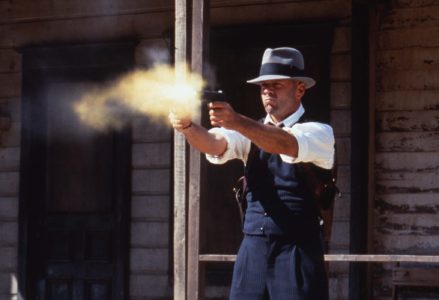
Then, something strange occurred: I was left cold upon first viewing of Walter’s noir western Last Man Standing. When I saw it in 1996, I was 13 years old; I had grown up with the gregarious Bruce Willis of Moonlighting and Die Hard, in which he was a good-time wise-ass and reluctant everyman hero neither preened to excess nor bulging in muscle, rather he was balding and vulnerable. But then in the moody opening moments of Last Man Standing, scored by Ry Cooder’s haunting ambient music, we were introduced to a different Bruce. With his gruff voiceover and stoic demeanour, I was thrown off balance and it affected how I viewed the film. Because Bruce was such a commanding screen presence, his taciturn performance dictated one’s response to the film more than the context of it being a Walter Hill film did. But then, as time went by and I revisited it as I aged along with it, I began to see a different film. As I worked on this book and spent a year intensely re-viewing and analysing Last Man Standing, it surprised me that it has emerged as one of my favourite Hill films, one I consider to be among the greatest American releases of the last thirty years. This is the beauty of these literary endeavours of mine – it highlights how we live with art and how our relationship with it evolves. When I look at that film now, I see a deeply melancholic, deftly original, and stunningly artistic work; Hill and his collaborators are, in my opinion, providing the best work of their respective careers – be it Lloyd Ahern’s cinematography, Ry Cooder’s music, Freeman Davies’s editing, and perhaps Hill’s directing.
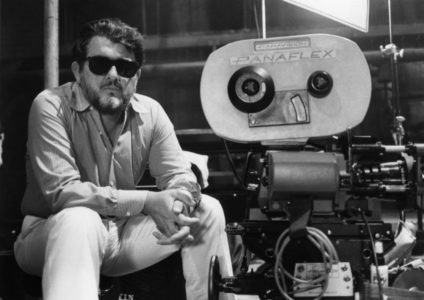
When I spoke to Walter for the book, I reverently applauded the film and he expressed his happiness at hearing that, especially considering the unfortunate response the film was met with upon release. His appreciation of my appreciation reminded me that the reason I write these books is to shine a light on these artists and their art which I feel deserve to be approbated. There have been plenty of articles on the cultural impact of The Warriors and the lasting influence of The Driver, but I haven’t seen much consideration of Last Man Standing, or Extreme Prejudice, or Trespass, or Red Heat, or Streets of Fire. These are the films that got me truly excited to be the writer of the first comprehensive literary overview of Walter Hill in the English language. It was an opportunity to make the case that the films between the acknowledged classics are just as valid and worthy of serious critical re-evaluation and celebration.
Several of Walter’s collaborators revealed to me how happy they were that he was being honoured with such a book and that they would be part of it. This was a platform for them to pay tribute to their beloved director, friend, and collaborator. To hear his collaborators, each eminent artists of their own, say that this project is something important are words I will never forget. It reiterated to me the power of art and the personal ripple effect that it can create, such as when in 1990 a seed was planted in the brain of a seven-year-old kid in County Kildare, a name: Walter Hill, which has led me to writing this very piece. That name would stay relevant throughout my life, growing in importance as my love of Film became absolute and inseparable from everything I do. And now, my appreciation of Walter and his work is tangible, on record in black and white within the pages that will live on the shelves of stores, libraries, and colleges around the world. To be able to come full circle with the artists who shaped my life with their art and do something proactive in return is an indescribable thrill and joy.
(c) Wayne Byrne
About Walter Hill: The Cinema of a Hollywood Maverick

This is a comprehensive journey through the long career of auteur Hollywood filmmaker Walter Hill, director of The Driver, The Warriors, Southern Comfort, 48 Hrs., Streets of Fire and many more. The book covers every motion picture that Hill directed, with historical detail and critical commentary on each, and discusses Hill’s overall cultural relevance and industrial impact. It includes candid conversations with producer Larry Gordon; actors Nicholas Guest, William Sadler and Michael Paré; cinematographers Lloyd Ahren and Matthew Leonetti; composers Van Dyke Parks and David Mansfield; screenwriter Larry Gross, and others who worked with Hill throughout his prolific career.
Pre-order your copy online here.


