

Olive Collins on the writing of The Healers’ War: a story of survival, faith, and the impossible choices people make in the shadow of war.
Every novel begins with a question that refuses to let go.
For years, I found myself returning to the same extraordinary story: the Irish missionary sisters who remained in Biafra during the Nigerian Civil War. While others fled, they stayed, risking their own lives to care for the wounded, the starving and the dying during one of the twentieth century’s greatest humanitarian disasters.
I hesitated before writing the novel. Missionaries are not fashionable subjects today, and public attitudes towards the Church have changed dramatically. I wondered who would want to read about Irish nuns serving in what was once known as “the white man’s grave” because of the devastating death toll among missionaries in Africa.
Yet the story refused to leave me alone.
I’ve learned that the novels worth writing are often the ones that satisfy my own curiosity first. I wanted to know what life was really like—not the simplified version found in history books, but the reality experienced by the people who lived through it.
The Healers’ War
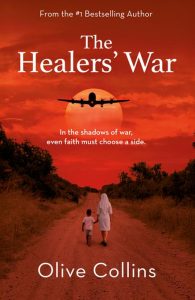
The Healers’ War tells the story of Irish missionaries who remained in Biafra throughout the conflict. Against overwhelming odds, they cared for civilians trapped by war for almost two and a half years. When the last route into Biafra was cut off, they built an airstrip deep in the bush so that relief planes could deliver desperately needed food and medicine. Those same planes carried critically ill children to safety. The missionaries were faced the heartbreaking responsibility of deciding which children would be evacuated and which would remain behind. The balance of life hung in their hands.
From the beginning, I knew I owed those who inspired the novel more than a good story. Fiction allows imagination to fill the gaps, but I wanted to honour the courage of the real people whose lives lay behind the narrative. At the same time, I didn’t want to create saints. The missionary sisters were human beings with strengths, doubts and flaws.
The story begins in Ireland before moving to Africa. I understood the world that produced Irish missionaries—the faith, resilience, duty and quiet determination that led so many young men and women to leave home for countries they had never seen.
Understanding Biafra
Understanding Biafra was another matter entirely.
It wasn’t enough to learn the political history or follow the course of the war. I wanted to understand the people whose lives had been torn apart by it. How did families live before the conflict? What traditions shaped their communities? How did they celebrate, mourn and endure? Above all, I wanted to understand what the Irish missionaries witnessed every day and the extraordinary resilience of the people they served.
Research became its own journey.
Like many historical novelists, I began with history books and newspapers archives, before turning to Nigerian writers whose own lives had been shaped by the conflict. Their novels, memoirs and poetry revealed the emotional landscape of the war in ways official histories never could.
The Intimacy of Diaries
But my favourite sources have always been diaries.
There is something profoundly intimate about reading thoughts that were never intended for publication. A diary might mention, almost in passing, the struggle to find food supplies. These seemingly ordinary observations reveal the rhythms of daily life far better than any historical overview. They remind us that history is not made only by generals and politicians, but by ordinary people trying to survive another day.
Research, however, brings its own dangers. It’s easy to believe that one more book or one more archive will finally reveal everything you need to know. Eventually, every historical novelist reaches the point where research must give way to storytelling.
For me, that moment arrives when the characters begin to take ownership of the narrative. They step beyond the historical record and become fully realised people whose decisions and voices feel authentic. Once that happens, the research no longer sits on top of the story—it becomes its foundation.
Authenticity, Depth and Credibility
One of the most valuable lessons I learned while writing The Healers’ War is that authenticity isn’t achieved by overwhelming readers with historical detail. Most of what I discovered never appears on the page. Instead, it quietly supports the world of the novel, giving it depth and credibility.
Readers don’t need every fact. They simply need to believe they have entered a real world inhabited by real people.
In many ways, the most important research never became dialogue or description. It gave me confidence to write with empathy rather than assumption. It reminded me that I was borrowing real experiences, and that borrowing carries responsibility.
There were many moments when I questioned whether I could do justice to a culture that was not my own. Those doubts never entirely disappeared, but perhaps they were necessary. They encouraged me to listen carefully and to pay attention not only to what was written, but also to what remained unsaid.
Honouring Remarkable People
Completing The Healers’ War was deeply satisfying, not because the research had ended, but because it had fulfilled its purpose. The diaries, poems, memoirs and histories had given life to fiction, allowing me to create characters who, I hope, honour the remarkable people whose courage inspired this story.
Historical fiction is often described as bringing the past to life. I think it does something slightly different. It invites readers to walk beside those who came before us, and to experience their fears, their compassion, their resilience and their humanity.
If The Healers’ War succeeds in doing that, then every hour spent among archives and forgotten diaries will have been worthwhile.
(c) Olive Collins
About The Healers’ War by Olive Collins:
Set against the Biafran War (1967–1970), The Healers’ War follows three lives bound together by famine, faith, and survival in a besieged corner of Eastern Nigeria.
As war encroaches upon their region, Irish missionaries refuse to flee, instead building feeding centers, clinics, and a secret airstrip to smuggle in aid and evacuate children. Among them is Valerie Corrigan, a young Irish woman who arrives seeking purpose after heartbreak. But as the war closes in and the moral certainty of her mission begins to fracture, Valerie is forced to confront betrayal, violence, and troubling truths within her own congregation.
Amid the chaos, Valerie meets Azubuike, a precocious nine-year-old boy born in a village where time is measured not in numbers, but in events. Banished from his home because of his mother’s volatility, Azubuike is sent to live with the missionaries. There, he must adapt to a new world—one defined by unfamiliar gods and foreign calendars. His friendship with Sister Valerie becomes a rare light in a darkening world.
When Valerie’s former lover, Oscar, returns, old wounds reopen, and the lives of Valerie, Azubuike, and Oscar become dangerously entwined.
The Healers’ War is a story of survival, faith, and the impossible choices people make in the shadow of war.
Order your copy of The Healers’ War online here.
And read more Meet the Author articles on Writing.ie here.


