

My brother, David Heidenstam, died in April 2024, a month short of what would have been his 80th birthday. He was a writer, who left behind a legacy of a play, a book of short stories, or micro-fictions, and volumes of poetry.
All self-published. Not because the works lacked quality but because he chose to work in areas of literature that were hardly mass-marketable. Why so? To answer that I need to explain David’s life.
He (and I) grew up in the 1950s and the early 1960s in a non-TV household where the radio – the spoken word – was the main source of entertainment, with high culture from the Third Programme. And there were books. I remember Bunyan’s Pilgrim’s Progress, and an exotically illustrated Rubaiyat of Omar Khayyam. Plus John Buchan. And as a result of school there were the French existentialists – Camus and Sartre.
The result was that David decided he would be a writer. After university he could have had a comfortable career in academia – the offer was made – and tried to write on the side. But that would have been half-hearted.
Travel and Write

The idea – and perhaps Jack Kerouac’s wayfaring On The Road was an influence here – was to travel, and write on the go, and when it was necessary to work then it would be something that provided time to write.
Hence, becoming a night-watchman. Do the rounds of the factory or the building site, and then settle down and take out the notebook to jot down ideas, thoughts and emotions. Or, when an Irish youth hostel (I think it was at Killala) he was staying at suddenly lacked a warden, taking the job on himself!
Twice David was roped in by the Irish owners of a sailing yacht to be the cook on voyages across the Atlantic to the US. He had less interest in food than anyone I have met, but seems not to have poisoned the important members of the crew who were doing the actual sailing. And the sea inspired some of the most memorable of his short stories.
Just as academia could have been a safe option, in terms of writing so could hoping for success by way of a novel in a popular genre.
David the Perfectionist
I am not sure David would have put it this way, but in general he only wanted to write something he would want to read. And he was a perfectionist. Especially with his poetry and the short stories, with every word counting, this meant frequent re-writings. Not conducive to finding a publisher.
Many of his individual poems appeared in magazines and collections, but the volumes of his work he had to self-publish, without the benefit of any organised PR and marketing campaign. Which may resonate as being both sad and familiar to would-be fiction writers, struggling to find a “proper” publisher for their work in an age when a celebrity name on the cover often trumps talent.
Which is where I eventually came in. David’s fervent wish was the any money from his estate was to be used to promote his writings, to introduce them to a far wider audience than they reached in his lifetime and to gain at least some of the recognition he and I believed they deserved.
Publicity
Having some money, and time on my hands, I have been able to hire a London firm, Cameron Publicity and Marketing, to help me achieve those goals, and in less than a week that has already borne fruit, in the shape of the chance to tell David’s story here.
And reading through the Writing.ie website it is apparent not just what an extraordinary number of talented authors are out there, deserving to be recognised. In an hour of reading, I came across some wonderful excerpts submitted by writers. But also that the help and advice they need is right here for them, via this invaluable resource.
I imagine no two writers are exactly alike, with the same aims and ambitions, and David’s story is not a universal one. But at its heart is a conundrum with which some may wryly identify. He hoped for recognition as much as anyone, but knew the kind of literature he was determined to produce was absolutely the worst possible way to achieve that. And he went ahead anyway.
(c) Mark Heidenstam
Links
David’s publishing website: www.greydolphinpress.com
David’s personal website, which includes his Footloose travel blog: www.davidheidenstam.com
Tales for my Dog (micro-fictions): Available from Amazon at €9.22 and Kindle version at €1.14.
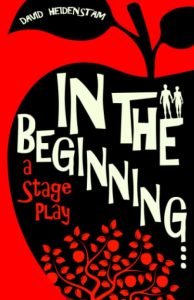
In The Beginning (play): Available from Amazon at €6.92 and Kindle version at €1.14.
Fault Lines (poetry): Available from Amazon at €4.61 and Kindle version at €1.14.
Passages (poetry): Available from Amazon at €7.50.
The Hook of the Sea by David Heidenstam
The following story is from Tales for my Dog, David’s collection of micro-fictions, and reflects his experiences at sea, even if happily this is mainly imagination at work. Thanks to Writing.ie for agreeing to publish it.
He was just shifting the tether of his harness from the port jackline to the starboard when the wave crashed into the cockpit and washed him out of it. He felt himself lifted over the lifelines, bounce once on the hull, then slip into the broken surface of the sea. So this was how it happened, he thought; this was how it came at last. The water began to fill his mouth as he tried to breathe. Then the next wave lifting, and he was back in the cockpit again – sprawled on a locker, the seawater draining out the scuppers. Twisting hard, he grabbed a stanchion, found the tether with his other hand, and clipped it on – then swung back round and grabbed the helm, spewing water from nose and mouth. How unlikely was that? he thought, as he turned the bow back to meet the storm; nobody would believe you. The sea took you, and spat you out.
His whole life hadn’t flashed before him; perhaps he’d escaped too early for that. Instead it was just one evening that had come into his head. He’d been young, not yet thirteen, they’d been on holiday in the west country, and his parents had arranged for him to go out on a fishing trip one night. Just him and an older boy, the son of the people who ran the guest house. The older boy didn’t want him along, but there was nothing he could say.
hey’d gone out in a rowing boat, into the calm bay between the headlands. The water lapped gently, and there was moon enough to see. The fishing was simple; they each had a line with hooks every few inches. The local boy showed him how to bait each hook with a lugworm, pushing the barb through the body twice. Then they just held the lines out by hand over the sides. After a few minutes they lifted them again, and he couldn’t believe it. Most of the hooks had a fish attached – not very big, but big enough. They’d unhooked the fish and thrown them in the bottom, where they flapped a while. Then re-baited the hooks, and done the same thing again. It was so easy, even he could get it right.
Then he realised the older boy had stopped, and was staring off to the side, not moving. He held up his hand; sit still, the hand said. So he’d just turned his head quietly and looked, and could see a dark shape in the water, like the long underside of an upturned boat. The two of them had sat motionless watching. The whale slowly drifted closer. Perhaps it’s asleep, he wondered, perhaps it’s dead. Then the spell broke. It was getting too close. The local boy shipped the oars and started to pull away. The whale stirred, gave the water a slow slap with its tail, and moved off. The older boy had looked shaken, but he, he’d been too innocent for fear. He’d sat and watched in the moonlight, as the whale headed back to sea.
(c) David Heidenstam


