

Land by Maggie O’Farrell is the tenth and latest novel from the celebrated Irish author of Hamnet. A native country (Ireland) is under British occupation in the 1860s. The tragedies and triumphs of these people should be preserved as true perspectives because they are the stories of our forebears that prove evolutionarily, if unevenly, that intellect triumphs over fear.
This is Ireland of the 19th century. British occupation oppression and Catholicism’s particular outrages are detailed with central significance as we glimpse the hardscrabble existence of a family of six, their dog, and the swirl of geology and history that engulfs them on the peninsula they will map, and where they live. Land is an origin history of particular — one might say uniquely Irish —spirit and grit.
A precarious and unsustainable world
The Great Hunger of the 1840s is over. The chance to earn a wage against possible starvation means that Tomas and Liam, father and son, initially do mapping work for the occupying British. While they work, they stay with an unnamed widow, who comes to know them well, and later does many good-neighbor turns for the family. A local priest drives a wedge between father and son eventually, contriving to have Liam join the Society of Jesus and train as a priest. Essentially, author O’Farrell creates (or re-creates) a world that is precarious and unsustainable. Change must come. But how? This is the question, so artfully posed in the novel.
Maggie O’Farrell is a first-rate writer of fiction. Readers will recognize O’Farrell’s astute use of the internal monologue to introduce the widow, and this might be an authorial tip of the hat to Virginia Woolf. Certainly, that writer’s influence is felt in this early passage, skillfully composed and added seamlessly. One of the pleasures of this novel is how thoughtfully and with what skill the author presents each character’s story, and how each achieves final resolution.
Land: a tale of resistance
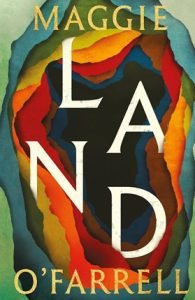
O’Farrell’s novel is a tale of resistance to overweening authority by a people who insist on self-determination. The story of a family is the story of a people. O’Farrell tells her story in ways that artfully point up triumph or tragedy and, at times, they are woeful tales. Ancestors suffered in ways we don’t. When a daughter, disguised as a boy, endures steerage for weeks on a ship sailing to Quebec and her money is stolen, we feel truth is given to us. And for what did they suffer for so insistently?
Maggie O’Farrell tells us: they suffered to win freedom from oppression. She shows us the sources of oppression, and how it was closer than the characters knew. Sometimes the source of their oppression was inside themselves, woven into their faith. We watch them as they act out their human response to necessities as they unfold. The conflicts and contradictions are real and historic. The reader is moved. We root for each character.
With respect to time, the author embraces decades and generations astutely, with great fluidity. Not every writer of fiction can do this. Where antipathy is a fact of life, and political and military outrages are common among the conquered, it is an artistic choice that underscores events over chronology.
Maggie O’Farrell
So what is different or good in Maggie O’Farrell’s writing? Her strong suite is story. Let this review report that this novelist tells a story of character and situation astutely. She writes human spirit with conviction. She handles chronology with artistic grace. In some cases, she merely announces the year: “It is 1880: a leap year.” This is when the second daughter leaves home and sails to Canada (15 years after certain other significant scenes). Time takes a second seat to story, which stays dominant and coherent to the last paragraph.
Land is more than a social/political commentary, more than a family saga, and more than a history. Maggie O’Farrell has written a cultural account of things that happened to people who lived then and had lives there, and suffered to give us our world. Preserving their story is important to preserving an accurate record of spirit in the face of privation.
(c) Tom Casey
Order your copy of Land by Maggie O’Farrell online here.
Tom Casey spent decades traversing the world as a professional airline pilot. In addition to flying passenger jets and writing fiction, he also co-produced a recent film documentary ‘Flying Boat’. Casey lives in Connecticut with his partner, Silvia Erskine, and Phoebe, their rescue dog. ‘Unsettled States’ is his third novel.
Read more from Tom Casey on Writing.ie here.


