

The Stories My Grandmother Told Me: Why the Curlew Cries
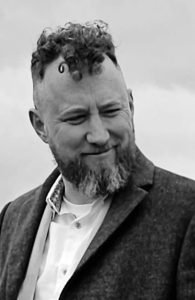
My grandmother, Helen Cosgrove, taught me some of the old Irish beliefs. The obvious like don’t touch the fairy fort or don’t cut the lone hawthorn and don’t praise a newborn baby too loudly in case something is listening. A lot of don’ts, I took them in the way children take in everything, half-believing, not even half listening and fully sure Nana was definitely away.with the faeries.
They were only stories, tall tales. Then a long time later as an adult I started reading about what people had done because of those beliefs.
The Changelings
In Irish folklore, a changeling was something the fairies left behind when they took one of ours. Usually a baby, occasionally someone’s wife. If a child didn’t thrive, or didn’t walk or talk when they should, or a woman got sick and seemed not herself, the belief could start and the cures would follow, fire, water and iron.
In 1826, in Kerry, a four-year-old boy called Michael Leahy couldn’t stand or speak. Surely today we may believe he had cerebal palsy but in the 18th century there were no medicals belief in this. An old woman named Ann Roche, who claimed she had the cure, had him bathed in the River Flesk three mornings in a row to put the fairy out of him. On the third morning they held him under too long. He drowned and in a court of law she was found not guilty of murder.
In 1884, in Clonmel, two neighbours waited until a mother left the house, then put her three-year-old son, Philip Dillon, naked on a hot shovel. He couldn’t use his limbs, again another medical.ailment. They were going to burn the fairy out of him.
And in 1895, in Ballyvadlea, County Tipperary, there was Bridget Cleary.
Bridget
Bridget was 26. She was married to a cooper, Michael Cleary. In March 1895 she got sick, and Michael sent for the doctor, then the priest, then the fairy doctor. Somewhere along the way he had decided the woman in the bed wasn’t his wife at all.
Her own family held her down while he forced cures into her and asked her, over and over, in the name of God, who she was. On 15 March he set her alight in their kitchen. Then he went and sat at a ringfort, waiting for the real Bridget to ride out on a white horse.
He got manslaughter, not murder.
I’ll be honest. I don’t think Michael Cleary believed a word of it. Bridget earned her own money and had her own mind, and I think he wanted rid of her. The fairies gave him a reason the people around him would swallow. Worse than that, they gave him helpers.
The Danger of Belief

That’s the part I can’t let go of. My grandmother’s stories weren’t dangerous. They kept children away from bogs and rivers and strangers. They explained a world that didn’t always make sense.
But any belief can be turned into a weapon if somebody wants to hurt someone and needs permission to do it. In the Cleary kitchen it was the fairies. In other kitchens, in other years, it was the Church, the flag or the family name. The trick is always the same. Take what people hold sacred, wrap your cruelty in it, and watch how few will question it, because questioning it means questioning everything they were reared on.
That’s what Why the Curlew Cries is about. Belief that turns violent. Violence that gets handed down like an heirloom. And the damage it does to people who were never even in the room.
The Vanishing Triangle
The other thing in the bones of this book is the Vanishing Triangle. Between 1987 and 1998, young women disappeared from an area of Leinster within roughly 80 miles of Dublin. Most were never found. The Gardaí set up Operation Trace in 1998. Decades on, families are still waiting.
My book is not based on any one of those disappearances. Those women had names and families, and they deserve better than to be borrowed for a plot. What I took was the question underneath it all: what if a serial killer had been working in Ireland, and nobody whose job it was to find him ever did?
In Why the Curlew Cries, women have been vanishing around the Ox Mountains for twenty years. No bodies or witnesses. Nothing, officially, to connect them. One Garda thinks there’s a pattern, and it has cost him his rank. And up in the mountains, there’s a family still living by beliefs the rest of Ireland left behind.
To them, the old stories aren’t stories.
They’re rules.
Why the Curlew Cries is out on 31 October 2026. Samhain, the night the old Irish believed the dead came closest, felt like the only right night for it. You’ll find it in several independent bookshops around the country, on my own website at jmlaneauthor.com, and on Amazon. If you pick it up in a local shop, you’re keeping the lights on for the people who keep books alive in this country, and I’d be grateful.
(c) J.M. Lane
About Why the Curlew Cries by J.M. Lane:
Former Garda Jack McLane has come to the Ox Mountains looking for a quieter life, or at least the remains of one. He has left the job behind, but not the things the job left in him. Grief. Guilt. The memory of an old friend who spent years thinking about the women who vanished from the west of Ireland and were never found.
When Jack is given access to that friend’s private notes, he expects obsession, loose ends, maybe the sad remains of a case that defeated better men than him. Instead, he finds a pattern. The trail leads him through lonely roads, abandoned farms, half-forgotten families and a landscape where people know more than they are willing to say.
In the shadow of the Ox Mountains, the past has not passed at all. It has only settled into the walls, the fields and the silence between neighbours. And somewhere in that silence, a killer has been waiting.
Where the Curlew Sings is a dark Irish crime thriller about grief, loyalty and the secrets rural Ireland keeps when no one is asking the right questions. For readers of atmospheric crime fiction, cold case mysteries and slow-burning rural noir.
Where the Curlew Sings is published on 31st October 2026. Order your copy of the book online here.
About the book Setanta and The Lady by the Water by J.M. Lane:

A mythic coming-of-age novella rooted in Irish folklore and shadowed grief.
If you loved Patrick Ness’s A Monster Calls this one’s for you
Setanta knows only this: his mother vanished, his father is a ghost of a man, and something ancient is following them. From haunted towns to forgotten hills, they chase the Lady by the Water, a banshee whose song marks the doomed. But when a cursed hound spares Setanta’s life, everything he thought he knew begins to unravel.
Trained in silence. Forged by loss. Marked by a name older than Ireland.
As his scar deepens and the veil between worlds thins, Setanta discovers a truth stranger than any bedtime tale: he’s not just a boy. He’s a weapon. And the monsters remember his name.
Perfect for fans of Patrick Ness, Susan Cooper, or folkloric dark fantasy, this lyrical Irish novella blends myth, memory, and the weight of blood into a powerful modern legend.
Order your copy of Setanta and The Lady by the Water by J.M. Lane online here.
Read more from J.M. Lane on Writing.ie here.


