

From Pen to Pixels: author Sophie Haeder on the modern writer’s toolkit and how authors must embrace digital technology in their novel writing.
From embracing AI as a tool to assist with composing text, to developing plot and characters using voice notes, writers are finding they must navigate the dynamic and ever-evolving landscape of writing in a digital age. As someone who has grown up alongside the digital revolution, I’ve witnessed firsthand how technology has transformed nearly every aspect of our lives, including the world of novel writing. How has digitalization changed the work environment for novelists and what impact has this had on our craft? I want to share my personal approach to writing in today’s tech-savvy world.
The Evolution of the Writing Environment
The process of writing a novel has evolved significantly from the days of typewriters and handwritten manuscripts. Today, digital tools and platforms offer writers a wealth of options to enhance their creative process. From word processors with advanced editing features to cloud-based storage solutions that safeguard our work from loss, technology has streamlined the mechanics of writing.
As a millennial, I’ve embraced these tools from an early age. I remember my first tentative steps into writing on an old desktop computer, the clunky keys and flickering screen a far cry from today’s sleek laptops and tablets. Now, I can write from anywhere – a coffee shop, on the plane, but most importantly my own terrasse – thanks to portable devices and Wi-Fi connectivity.
The Influence of the Internet
The internet has been a game-changer for novelists. It provides instant access to an infinite repository of information, which is invaluable for research. Whether I’m looking for fantasy facts, or details about physics, or even just a synonym, the answers are just a few clicks away. This ease of access has undoubtedly broadened the scope of what we can write about and how accurately we can portray different settings and themes.
Moreover, the internet has facilitated unprecedented levels of connectivity and collaboration. Writing, traditionally a solitary endeavour, has become more communal. Online writing groups, forums, and social media platforms allow writers to share their work, receive feedback, and connect with a global audience. Personally, I’ve found immense value in these communities. They provide not just critique but also encouragement and camaraderie, making the often-lonely journey of novel writing a shared experience.
Social Media: A Double-Edged Sword
 Social media is perhaps one of the most significant changes in the digital landscape. It offers a platform for self-promotion, building a readership, and connecting with like-minded people. Through Instagram, Facebook, Pinterest and TikTok, I can share updates on my writing progress, promote my book, and engage with potential readers in real-time. This direct interaction with readers is something authors from previous generations could only dream of.
However, social media can also be a double-edged sword. The constant connectivity can be both a blessing and a curse. While it offers a platform to market my work, it also presents countless distractions. The temptation to scroll through feeds, check notifications, or engage in debates can easily eat into precious writing time. Managing this balance is crucial. I’ve learned to set boundaries – designated writing times, tech-free hours, and no notifications – to ensure that social media enhances rather than hinders my productivity.
Digital Publishing and Self-Publishing
One of the most transformative aspects of digitalization is the rise of digital publishing and self-publishing. Traditional publishing routes are no longer the only way to get a novel into readers’ hands. Platforms like Amazon Kindle Direct Publishing, IngramSpark, Smashwords, and others have democratized the publishing process, allowing anyone to publish their work.
For me, self-publishing has been an empowering experience. It offers creative control over every aspect of the book, from the cover design to the pricing. It also allows for a faster turnaround time from manuscript to market. However, self-publishing comes with its own set of challenges. It requires a significant investment of time and resources into marketing and distribution, tasks traditionally handled by publishing houses.
Despite these challenges, the rewards of self-publishing are immense. The ability to retain full rights to my work and to have full creative control has been incredibly fulfilling. The digital world has opened up opportunities that were previously unimaginable, enabling authors to carve out their own paths in the literary world.
The Craft of Writing in a Digital Age
While technology has transformed many aspects of writing, the essence of the craft remains unchanged. Writing a novel still requires creativity, discipline, and perseverance. However, digital tools can aid in the creative process. Software like Google Workspace, for example, not only helps keep things safe and organized with Tasks, Docs and Drive. It’s also available on any device, so when inspiration strikes, you can type it on your smartphone and pick it up on your laptop the next day, making the process more efficient. Grammar and style-checking tools like DeepL Write or Grammarly offer real-time suggestions, helping to refine the prose.
For me, the biggest change has been the ability to write collaboratively. Tools like Google Docs also allow for real-time collaboration with editors and beta readers, no matter where they are in the world. This has made the revision process more dynamic and interactive.
Embracing the Future
As we look to the future, it’s clear that technology will continue to evolve, bringing new tools and opportunities for writers. Artificial Intelligence, for instance, is beginning to play a role in the writing process, offering predictive text and even generating story ideas. While some may view this with apprehension, I see it as an exciting development that can augment our creative abilities.
In this rapidly changing landscape, adaptability is key. Embracing new technologies while staying true to the fundamentals of storytelling is the way forward.
Endless Opportunities Await
The digital age has undeniably transformed the work environment for novelists. From the tools we use to the way we publish and connect with readers, every aspect of writing has been touched by technology. For me, navigating this landscape has been a journey of discovery and adaptation. While there are challenges, the opportunities are boundless. By embracing the digital world, we can enhance our craft and reach readers in ways we never imagined.
Writing a novel in today’s world is both a testament to our times and a bridge to the future. As we continue to evolve alongside technology, the stories we tell will carry the imprint of our digital journey, capturing the essence of what it means to be a writer in the modern age.
(c) Sophie Haeder
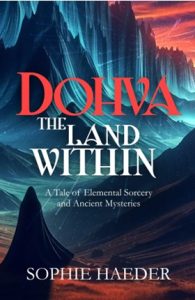
Sophie Haeder is a content marketing manager and the author of debut fantasy novel Dohva: The Land Within. Find her at www.sophiehaeder.com and across Instagram, TikTok and Facebook: @sophiehaeder
About Dohva: The Land Within by Sophie Haeder
Embark on a journey to the enigmatic realm of Dohva, where elemental magic reigns supreme and ancient secrets lie buried beneath the mountains.
In the isolated land of Dohva, where souls are trapped in an endless cycle of rebirth by an ancient elemental sphere, a malevolent force wields the forbidden dark magic of the demon prince Agthod. Avala, a rebellious air sorceress haunted by the loss ofher closest friend, is driven to unravel the mysteries that have long plagued her world. She finds unlikely allies with three anti-heroes, a colourful and diverse cast who each struggle with their own demons and desires for redemption.
But as the shadows deepen and the threat grows, Avala and her newfound companions must set aside their differences and forge an uneasy bond. But can they confront this powerful enemy force that threatens to consume their world and change their destiny forever?
Dohva – The Land Within is the first book of an epic fantasy meets romantasy trilogy that will captivate readers from beginning to end and leave them eagerly anticipating the next installment in this spellbinding saga.
Dohva: The Land Within by Sophie Haeder is available from all good bookstores: https://www.sophiehaeder.com/buy-it-here


