

Tim Robinson, author of The Difficult Wife, on why and how ghost stories make for the perfect psychological thriller . . .
Try randomly googling ‘what is a psychological thriller?’. On second thoughts, don’t bother – I’ll do it for you. Here’s a definition to put you to sleep, but, hey, it’s only one sentence. A subgenre of the thriller genre that focuses on the psychological states and inner turmoil of characters, often exploring themes of mental instability, obsession and unreliable narration to build suspense and create a sense of unease. Well, my first reaction on reading that was: but this is what I do in my novels, particularly my latest, The Difficult Wife, and yet I call them ghost stories.
But take a look at some famous examples of both genres – the psychological thriller and the ghost story – and you start to see that they often blur so much that the distinction becomes meaningless. For instance, Daphne du Maurier’s most famous novel, Rebecca, is widely regarded as a psychological thriller because it explores obsession and jealousy, creating a suspenseful and unsettling atmosphere that involves the psychological torture of a troubled narrator from whom key information is withheld. But re-read the novel, noticing the important differences from Alfred Hitchock’s famous black and white film, and you’ll see why I call it a ghost story. Firstly, it is dominated by the dead first wife, Rebecca, after whom the novel is titled (the second wife, the narrator, remains nameless throughout) and her presence never leaves Manderley, her former home. Second, at times, the narrator feels air moving behind her in a closed room but turns to see nothing – and this contributes to her mental deterioration. Next, Mrs Danvers, the housekeeper, warns her that the dead might return and watch the living, and then at the very end of the book (not to be confused with the film, which clearly blames Mrs Danvers) a mysterious fire burns down Manderley. Was it started by the vengeful ghost of Rebecca? It’s certainly possible.
Ghost Story or Psychological Thriller?
 On the other hand, take Sarah Waters’ popular The Little Stranger, which was made into a film. Now, all the critics called it a ghost story, some even claiming that she had re-invented the genre. But on examination, it looks more like a straightforward psychological thriller to me. Okay, there are all the hallmarks of a traditional ghost story – the decaying manor house, dark patches and scribbles appearing on the walls, mysterious footsteps and knocks, and furniture moving about – but read carefully and you eventually realise that these are all the contrived manipulations of a narrator who is revenging himself on the posh inhabitants who have snubbed him in the past. In other words, nothing supernatural has happened: he’s merely been gaslighting them.
Which neatly brings us to the mother of all psychological thrillers that for much of its duration resembles a ghost story: yes, you’ve guessed it, Gaslight. Throughout the 1944 film, an heiress hears mysterious noises in the attic and notices the houselights dimming and then glowing again for no apparent reason. As seeing ghosts is perceived as a sign of madness in modern times, she starts questioning her own sanity – only to discover at the end that her husband has been playing tricks on her to drive her mad, because he’s after her money.
The first modern ghost novel
Now, I’m not saying that all ghost stories are psychological thrillers – there are many in which a ghost is just a ghost and there’s no ambiguity and little symbolism about that – but my favourites occur in the mind. Ones in which the ghosts might simply be a sign of madness or represent something repressed in the main character’s unconscious. An impulse or a painful memory that keeps refusing to go away. The first book to give us these kinds of ghosts is probably The Turn of the Screw by Henry James, published in 1898 (and made into a film, The Innocents, and, more recently, another one starring Nicole Kidman, The Others.) I’d called this the first modern ghost novel. Seen through the eyes of an increasingly hysterical governess, the reader cannot tell if she is really witnessing sexually depraved ghosts trying to corrupt her young charges or whether, through repression, she has become so sexually obsessed they are figments of her own imagination. At the end, she tells us that the little boy has died of fright at seeing the ghost, but we wonder if she has unintentionally strangled him instead.
But this psychological uncertainty wasn’t James’ invention. He learnt it from another, earlier American master, the great Edgar Allan Poe – the father of the modern ghost story as psychological thriller – whose short stories are mostly narrated by mentally unstable men who think they see supernatural happenings which may simply be the products of their derangement. In an early story, Lygeia, for instance, has the beloved, dead first wife really returned to murder the second, hated one and take over her body? Or has the husband simply been driven mad by grief and too much opium into imagining it? In The Black Cat has the murdered pet returned to revenge himself on his former owner or has the alcoholic narrator been driven mad by his own cruelty and violence to those he loves most?
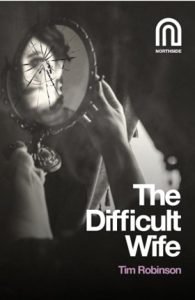
And finally there is The Difficult Wife, my novel. Is the first dead first wife taking over wife number two in order to revenge herself on her husband? Or has the heroine been driven so crazy by the manipulations of those surrounding her that she imagines this ghostly possession? Is it then a ghost story or a psychological thriller? Well, you’ll have to read it to find out!
(c) Tim Robinson
https://gothictim.substack.com/
About The Difficult Wife by Tim Robinson:
When painter Lucy Lake meets Morten Andersen in Picasso’s studio, the handsome Dane makes a poor impression. An arrogant philistine blind to Modern Art, whose scornful gaze makes her feel like a cheaply-dressed fool. But when she discovers his past – he came to Paris to escape memories of a disturbed first wife who recently killed herself – she softens, leading to a marriage where she will become his second ‘difficult wife’. In her husband’s dark, remote, rural house, she begins feeling the presence of the first wife circling ever closer, moving inside her. But is this ghostly possession or simply an undermined woman driven towards the brink of mental collapse? What price will she pay to save her sanity and her Cubist art? In this Gothic historical thriller, a talented young female artist must fight for survival in a world where men still rule.
Order your copy online here.
And see here for more on writing psychological thrillers on Writing.ie.


