

Can you really write a comedy about mental health?
When I first started writing about mental health, I found that writing humorously came naturally. I had experienced panic attacks and health anxiety for many years, and putting a comedic spin on things was my way of dealing with it all.
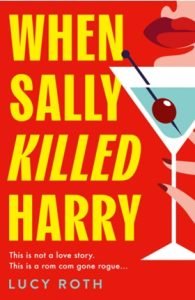
My writing began with a fortnightly column about mental health stigma for Sarah Millican’s Standard Issue magazine. I then wrote a humorous non fiction book – A Series of Unfortunate Stereotypes and a later one called Snowflake, also exploring mental health stigma. I’ve since written fiction focusing on mental health problems (The Twenty Seven Club and Parklife), as well as novels that touch on mental health problems and experiences without centring them (like my new thriller When Sally Killed Harry and my feminist comedy No Worries if Not!). I’ve also advised on TV and film scripts on behalf of a range of mental health and recovery charities, working on programmes such as Coronation Street, Hollyoaks and Holby City.
When it comes to my own work, I continue to use humour in most of what I do. But I never laugh at mental illness. Here are some of the things I keep in mind to strike the right balance.
People are more than a diagnosis
 One of the problems we used to see a lot in TV, movies or fiction is where seemingly strange characters present as being diagnosed with a mental illness. It’s as though mental health problems and personalities are one and the same. You might introduce a character with a mental illness, show them only when their symptoms are at their worst, and then never see them again. So all you see of them is mental illness. This is so incredibly stigmatising. Yes, mental health problems can present with some fairly extreme symptoms that might seem ‘odd’ or ‘strange’ – but these are often fleeting. I have an anxiety disorder and I’ve had panic attacks where I believed I was going to die, chanted things to myself over and over while pacing a room and rocked up to A&E on more than one occasion hyperventilating. I think it’s fair to say that most people who meet me, other than those closest to me and medical professionals, will never have seen me in that state. Those actions and behaviours do not represent my personality. Which is why I think, in stories, it is so much better to show those experiences as a part of somebody’s life. Those experiences are not representative of who they are. So if the character is nice and rounded, and you want them to be humorous, there should be plenty of opportunity to do so without making light of some of the more challenging experiences that they go through.
…so you can laugh with someone who has a mental health problem…
Having a mental health problem doesn’t mean we don’t have a sense of humour. Of course, if somebody is depressed, they might not feel like laughing at times or, conversely, they might be laughing and joking on the outside to cover up what they’re feeling on the inside. But, as already mentioned, depression is an illness, not a personality. I wrote a character in two of my books, The Twenty Seven Club and Parklife called Emma who experiences debilitating panic attacks and develops an addiction to drugs and alcohol. But I also put her in all manner of farcical situations and she cringes and laughs and jokes about them – and we can cringe and laugh and joke along with her as we read. The farcical situations I put her in, however, have nothing to do with her mental illness. They relate to other parts of her life and personality.
Saying that, I know that I personally find relief in reflecting humorously on some of the situations I’ve been in (I used to call my anxiety disorder my ‘meerkat’ as it was always on the lookout for danger) – and I know friends who experience health anxiety and OCD have spent time sharing their funny stories with me too while we’ve roared with laughter over a coffee at the ridiculousness of our escapades. I think, however, that it’s difficult to do this unless you have first-hand experience of the illness or symptoms you’re writing about – but that’s my personal opinion. Either way, as long as the humorous reflections aren’t coming from another character looking on and laughing, there are ways to use humour that reflects on some mental health experiences that, when done with empathy and warmth, readers may actually find cathartic.
You don’t have to avoid stigma entirely – use it in context
The impact of stigma can be just as damaging as the symptoms of mental illness – causing people to isolate, feel ashamed and fear asking for help. Which is why it’s just as important to raise awareness of the impact of stigma in its own right. I remember watching an episode of EastEnders where past rivals Sonia and Stacey were having a screaming match in the Square (as you do in Walford). Sonia said something about Stacey being an unfit mother because of her mental illness – but the character was challenged on this and the story briefly, but powerfully, explored why it was wrong to suggest such a thing. Sonia was the one who ended up looking red faced – not Stacey.
When it comes to humour in a mental health storyline, one thing you could do is make fun of those inflicting shame and stigma – rather than those experiencing it. Besides, if you’ve experienced shame and stigma as I have, it’ll feel nice and rewarding!
Top tips
And finally, just a few top tips to finish on….
Don’t use mental health problems as adjectives
We would never describe someone‘s behaviour as ‘so hypothyroid’ or ‘so COPD’, so probably best not to refer to someone’s house-proud nature as ’so OCD’ or someone’s mood swings as ‘so bipolar’. These are serious conditions that shouldn’t be made light of.
Don’t overshare the detail when it comes to depictions of suicide
There is a lot of stigma when it comes to suicide, and it’s absolutely right that we talk about it. Talking is a positive thing – when we do it sensitively. However, some of the detail could be triggering or distressing for others. For example, it’s never a good idea to talk in detail about methods of suicide. There’s more guidance on this on the Samaritans website.
Mind Your Language
There are certain phrases that are outdated because they are no longer accurate. For example, nobody ‘commits’ suicide. It isn’t a crime anymore. Instead, you could say ‘died by’ suicide.
Similarly, if you’re going to talk about specific mental health problems, do your research on the illness or symptom first. For example, ’psychotic’ is a word often used in entirely the wrong context. I wrote about this when the brilliant series Killing Eve was all the rage, and fans took to Twitter to talk about how ‘psychotic’ Villanelle is. But the character of Villanelle is far from psychotic. She is psychopathic – completely different.
If in doubt, check out Mind’s A-Z of mental health.
When it comes to talking about mental health problems nobody is trying to police you – but thinking about how it’s portrayed and reading up on guidance could make a huge difference to the reader – and your work will be all the better for it.
(c) Lucy Roth
About When Sally Killed Harry:
Say hello to Sally.
This is the story of how I killed Harry Collins. Destined to be the great love of my life – until one day I wake up in the Big Apple with the world’s worst hangover, an empty bank account, and the sinking feeling that my life just nosedived. How it happened is a blur, but one thing is clear: I’ve been swindled and I’m not happy about it.
She’s the woman of your dreams.
And it’s all thanks to Harry – a total dreamboat and a devil in disguise. He’s got charm, secrets, and a smile that screams trouble. Little did I know, Harry’s not just a pretty face – he’s a liar and conman.
Or is she your worst nightmare?
When I discover I’m not the only victim, I decide it’s only right I take my revenge. And with a group of wronged women behind me, murder isn’t on the agenda yet because Harry’s in for a nightmare and I’m only just getting started…
A wicked, whip-smart revenge thriller, perfect for fans of Katy Brent, Bella Mackie and anyone who wants to take their revenge on The Tinder Swindler or Sweet Bobby.
Order your copy online here.
And read further on the issues of writing and mental health on Writing.ie here.


