

Author Katie Allen on Writing Happy is the One: Asking questions in fiction . . .
I met Robin on a problem page. Writing always begins with the character for me and my main man in Happy is the One was born out of a creative writing exercise many years ago. A teacher handed us letters to an agony aunt, told us to pick one and put them in a short piece. Having spent the previous five years juggling a job, small children and a very sick mother, I was drawn to the man who had written in about caring for his frail parents. His letter was short but powerful: he never had time for himself, he felt he was never enough and nor was the care he was struggling to provide. Many of us can relate to this. More and more, my friends talk about being pulled in all directions by caring duties.
For the writing task, I named the man Robin and placed him in a blossoming relationship and on the cusp of buying a new house. Then his mother had one fall too many and Robin’s plans unravelled. Instead of moving into his dream home, he took the spare room in his parents’ bungalow.
For a while, that’s where he stayed – in the bungalow and on a page on my laptop, a one-off writing exercise left aside as my focus switched to completing my first novel, Everything Happens for a Reason. But I suppose a part of Robin was also living in my head, and once that first novel was out, his faint nagging became louder: hadn’t I said I was going to write about caring?
Then Mark Twain came on the scene. Specifically, I stumbled on Twain’s foretelling of his own death. The writer was born in 1835 as Halley’s Comet appeared in our skies and in 1909, he predicted he would die when the comet returned in 1910. He was right. I asked myself, what would it do to a person, if they knew the date they were going to die? What if Robin, a man struggling to carve out time for himself, knew exactly how much (or how little) time he had left? What would make someone believe such a thing in the first place? One answer has to be the need for control. In a chaotic and often frightening world, many of us create belief systems to claw back some feeling of power. It’s a theme of my first book. When Rachel’s baby dies just before delivery, someone tells her platitude that “Everything happens for a reason.” Rachel takes it literally, identifying a reason and even a culprit, with alarming results.
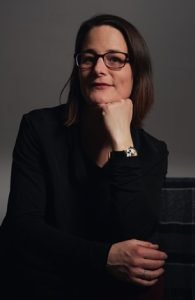
I am no stranger to this kind of magical thinking. I’ve had a largely happy (and certainly privileged) life but it’s been punctuated by huge personal losses: my brother died when I was 12; my father when I was 18. After that, I told myself that I’d had my share of losses and there would be no more. Then our baby son died and later my mother after years suffering from a brutal neurodegenerative disease.
I was proved wrong. But for a while there, I had clung tightly to a fallacy. I liked the idea of writing a character who did likewise and against a similar backdrop of early grief. In Robin’s case, he is born when Halley’s Comet passes earth in 1986 and he is convinced he will die aged 75 when it returns in 2061. He grows up being told about Twain’s comet theory and when he survives something he shouldn’t, his belief that he has a death date is cemented. We meet him when he is halfway there and has to give up a life in London to go and care for his sick father.
In all honesty, the halfway point was dictated by the current position of Halley’s Comet. But it was ideal for exploring midlife regrets, and how these are exacerbated by tending to a parent’s care needs. For Robin, moving back to the stifling seaside town of his childhood intensifies his feeling of being stuck. In these circumstances, he doubles down on his comet belief, implementing a strict budget for every remaining day of his life. Instead of liberating him, his supposed knowledge of a death date has stopped him living a full life.
I knew I needed Robin to change, to grow (up!). To help with that, we have his love interest and foil Astrid. It is Astrid who provides the book’s title. She tells Robin that people have been selling certainty for millennia, quoting the Bible’s assertion that, “Happy is the one who reads this book.”
As for what Robin learns about caring, I was tempted to write long happy scenes where his dad has breakthroughs; where they surmount the illness and have carefree days out. But I know from my mother’s illness that those brighter moments are just that. They are moments. They are all the more precious for it, but they are never whole days. There are glimmers of joy for Robin and his dad but any more than that, I felt, would be both inaccurate and unfair to those caring and being cared for.
In lighter moments, further assistance on Robin’s quest to make sense of life comes from strangers. He takes a job as a minicab driver so he can ask each passenger the same question: “What would you do if you knew the date you were going to die?” Those conversations were fun to write.
I’ll say no more on whether Robin manages to unshackle himself from his comet belief. But I’ll end on what I’m asking in Happy in the One, rather than with any illusions that it can tell readers anything. I’m asking how much we constrain ourselves, how much our traumas constrain us, how much our sense of duty constrains us (and perhaps it should). What does it take to truly live?
(c) Katie Allen
Katie Allen is author of Happy Is the One, published by Orenda Books.
About Happy is the One by Katie Allen:

What if halfway through your life was just the beginning?
Robin Edmund Blake is halfway through his life.
Born in 1986, when Halley’s Comet crossed the sky, he is destined to go out with it, when it returns in 2061. Until that day, he can’t die. He has proof.
With his future mapped out in minute detail, a lucrative but increasingly dull job in the City of London, and Gemma to share his life with, Robin has a plan to be remembered forever.
But when Robin’s sick father has one accident too many, the plan starts to unravel. Robin must return home to the tiny seaside town of Eastgate, learn to care for the man who never really cared for him, and face the childhood ghosts he fled decades ago.
Desperate to get his life back on schedule, he connects with fellow outsider Astrid. Brutally direct, sharp-witted and a professor at a nearby university, she’s unlike anyone he’s ever met. But Astrid is hiding something and someone from Robin.
And he’s hiding even more from her…
Order your copy of Happy is the One by Katie Allen online here.
And read more Meet the Author articles on Writing.ie here.


