

Historical Fiction: Navigating the Research Labyrinth by Liz McSkeane
Late in 2022, while I was working the final edits to my new historical novel, Aftershock, in the course of an internet search to check a minor detail, I stumbled across a recently published biography of the 18th century Portuguese statesman, the Marquis of Pombal. The discovery filled me with a mixture of elation and dread.
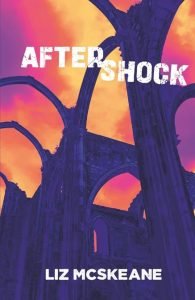
Aftershock is the story of a nation in crisis. On All Souls’ Day, 1755, in less than ten minutes, a massive earthquake reduced the city to rubble, followed by a tsunami and later a firestorm that raged for five days, plunging the nation into chaos and shattering the foundations of society. The man who emerged from the ruins to rebuild the capital and restore order was Dom Sebastião José Carvalho e Melo, the future Marquis of Pombal, at that time a minor politician but soon to become de facto ruler of the country, now the hero, or anti-hero, of my novel – and the subject of this new biography. Which, of course, I had not read.
One of the advantages – and, as I would discover, disadvantages – of tackling an event such as the Great Lisbon Earthquake in the social and political context of the Age of Enlightenment, is the wealth of documentary evidence available. This includes eyewitness accounts of the disaster and its aftermath, commentaries by contemporary intellectuals and analyses by later historians, biographers and scholars on the causes of the disaster and its impact on Portuguese society, as well as on the European world view. And, of course, polemics concerning the Marquis of Pombal himself, who was, and still is viewed as either a hero who saved a crumbling nation from chaos, or a brutal, self-serving villain.
Researching Historical Fiction: Where to Start?
 With so many sources available, how can a writer – if, like me, you are neither a historian nor a biographer – know where to start? How to decide which material is essential reading, and which to scan quickly or set aside? And, just as important, when, and how, do you know when to stop? As my accidental discovery showed, there is always another book, and when it appears, you will want to get your hands on it. For the writer of historical fiction, research is not a chore, like homework, but rather a labyrinth where it is tempting to get lost in the events and characters of another era.
My Aftershock journey began – though it’s hard to believe it’s been so long – back in 2016, when I heard an interview on Pat Kenny’s Newstalk radio show with a historian called Mark Molesky, who had just published a book about the 1755 Lisbon earthquake called This Gulf of Fire. I already knew about the earthquake – just that it had happened, nothing more – and in the dim and distant past, I had spent some time in Lisbon as a student of languages. So my ears pricked up. I stopped what I was doing and sat down to listen. Afterwards, I sent away for the book. And then another, on the same subject. And another, ever more fascinated, not only by the facts of the earthquake and its aftermath, but by the prevailing social and political climate in which the disaster occurred; and especially, by the character of the man who would become the Marquis of Pombal. The result is my forthcoming novel, Aftershock.
Of course, I did read that new biography. Curiosity overcame panic. Fortunately, although I did glean a few interesting snippets that found their way into the final draft, I felt no compulsion to rewrite or even revise my text. By that time, I had arrived at that essential point of no return – a mental state that sets the boundary dividing work-in-progress from the final stretch, heading towards completion.
Phases of Historical Research
Reflecting on the development of Aftershock, I see now that my research moved through distinct, though sometimes overlapping, phases. After the initial scatter-gun approach, when one book led to another, I began to notice recurring references to certain primary sources, including contemporary eyewitness accounts and commentaries, as well as important secondary texts such as biographies. Some of these were available online, others in libraries, including the National Library of Ireland and Trinity College, Dublin and some I borrowed or bought. It was during this phase, when a shape was starting to emerge from the myriad details I was absorbing, that I visited Lisbon, walked the streets where my characters had walked, visited the places where they lived and died, contemplated ruins still standing since that tragic All Souls’ Day, made notes, took pictures. And wrote.
For a time, therefore, the twin processes of research and writing co-existed. Along the way, as particular characters attracted my attention – for example, some of the women who played a significant role in the events of the time – my research, and also my writing, moved from the general to the particular, focussing on the actions and motivations of certain people. Eventually, after completing a first and then two subsequent drafts, it was time to draw a line under the research and concentrate my efforts on developing the themes and honing the writing. Even so, I could not resist allowing a few last-minute texts to get in under the radar.
Looking back on my Aftershock journey, I am struck by the subjectivity of the creation of a historical novel, not only in the writing, but perhaps even more so in the investigation which unearths the factual material and commentary that informs it. Another person working with identical sources would produce a completely different book – which reminds me that no matter how much research informs it, a historical novel is not a history. Yes, the subject draws on the actions of real people. Even so, historical fiction is not an objective account of those facts, but rather, a fictional reimagining of them, with all the subjectivity and interiority of the genre, which can illuminate universal themes at least as profoundly as an academic history of the time.
(c) Liz McSkeane
About Aftershock by Liz McSkeane
Lisbon, All Souls’ Day, November 1st 1755.
In less than ten minutes, a massive earthquake reduces the city to rubble. An hour later, a tsunami floods the city, followed by a firestorm that rages for five days. Assailed by earth, water and flames, thousands of people die.
From the ruins of the devastated city emerges one man who resolves to deliver the country from disaster, promising to ‘heal the sick and bury the dead’: Dom Sebastião José Carvalho e Melo, who will later become the Marquis of Pombal. Facing down contempt and opposition from a decadent aristocracy, obstructed by the powerful Jesuit order, Dom Sebastião, with the support of the king, reconstructs the capital, rebuilds the economy and overhauls every arm of government, restoring order from chaos.
But at what cost?
Aftershock is the story of a nation in crisis, and the unprecedented actions of one leader determined to protect the foundations of society.
But how far can he go to protect the social order, without destroying it? And is the price ever too high?
Aftershock will be available in all good bookshops and online from October 15th. Pre-order your copy online here.
And see here for more articles on writing Historical Fiction.


