

Why do we love stories set in faraway places? I often ask myself this question, and every time my mind returns to the village in Kerala, India, where I was born. It was remote in the truest sense: our home stood in the middle of a farm, bordered by a virgin stream originating from the hills that framed our land. On a clear summer night, the sky was so thick with stars that you could hardly see the darkness behind them.
Yet for all that physical remoteness, we were never remote in our ideas or our curiosity about the world. Books were my window; my first portal to places unimaginably distant from our own.
I grew up in a Catholic family of seven siblings, and my earliest memories are coloured by the image of my mother reading late into the night, long after the rest of the house was quiet, she would be poring over a book under the dim glow of an oil lamp. Daytime never belonged to her; she had children to raise and a farm to run. But those stolen hours at night were hers—and through her, reading became my passion too.
The Church Library
The church library was our treasure trove. It offered stories that carried me from our small village to worlds I never imagined. I remember reading Gulliver’s Travels and longing to see every strange land described. Oliver Twist painted London so vividly that the city took shape in my mind long before I ever set foot there. I devoured every Sherlock Holmes story by Arthur Conan Doyle, tracing rugged Moorlands and Victorian streets through his words. With Agatha Christie, I could travel to English countryside manors one-day and to Middle East and mysterious corners of the world another day, both felt real and enchanting.
Stories depicting the Great Atlantic Migration opened yet another horizon—stories of struggles, hope, and reinvention. Through them, I witnessed the journeys of those people who crossed the ocean in search of a new life, with all their dreams, heartbreaks, triumphs and tragedies laid bare.
And, of course, there were also the fantastical realms that shaped generations. How many of us read The Lord of the Rings or The Hobbit and imagined Middle-earth so vividly that we practically walked beside Frodo, Bilbo, Gandalf or Thorin Oakenshield? Or entered the magical corridors of Hogwarts, becoming part of Harry Potter’s world as though we had always belonged there?
These books lift us out of the absurdities and confusions of our real lives and take us somewhere else—somewhere magical, meaningful and oddly comforting. They allow us to escape, re-imagine and rediscover ourselves.
Stories: a sense of belonging
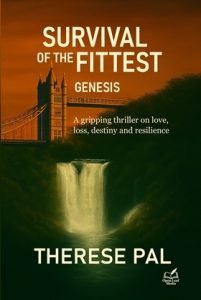
That’s the power of Storytelling, enabling us to embrace diversity, inhabit different cultures, and celebrate the richness of the world without prejudices. Stories give us a sense of belonging, even to worlds we were never part of. Regardless of where we are born or which culture shapes us, literature allows us to step into a global identity, to feel as though we belong to the world itself.
When I began writing my own book, Survival of the Fittest, I knew how much my life had been shaped by the worlds I have been. I have lived half my life in India and the other half in London. Combining these worlds—through landscapes, people, and the quiet threads of history—felt natural and deeply fulfilling.
My novel traces a journey from England to India, drawing from places I have walked, stories I have inherited, and experiences engraved into my own life. There is a unique richness in the stories of our parents and grandparents – their migrations, their struggles, their courage, their quests to build a better life. These may not span continents, but they hold the same universality of human aspiration.
The religious discipline and beliefs they followed were not so different from those of an Irish family of the same era. Attending Mass every Sunday in your Sunday best, making an effort with a celebratory meal—however small it might be—having large families because children were considered God’s gift (certainly not something to be interfered with by notions of contraception!), a firm belief in education as the path to a better life, absolute celibacy before marriage, and the horror associated with bearing children out of wedlock. Abortion was unthinkable, even after it became legally permissible.
The list of similarities is endless, yet so few recognise them because we automatically assume that the culture of a faraway land must be foreign. In truth, they are surprisingly alike. Some of my early British readers even asked why many of the characters had Christian names. I had to explain the long history of Christianity in Kerala which dates as far back as the 1st to 4th century AD, possibly earlier than in much of Europe.
In my writing, I wanted readers to travel with my characters—to feel the soil, smell the air, meet the people, witness the transformation of a wild and uncharted land into a promised land of milk and honey, of hope and opportunity. I wanted to preserve authenticity: of character, culture, environment and experience.
Travel in Stories and in Real Life
Ultimately, the purpose of Survival of the Fittest is to inspire readers to look beyond divisions and prejudices and embrace the beauty of our world. Travel -whether through stories or in real life – reminds us that our planet is astonishing, and humans everywhere are fascinating in their diversity and their eternal spirit.
There is so much richness in our differences, so much to learn if only we choose to explore.
That is why I write. That is why I tell stories of faraway places. And that is the experience I hope my readers will find in my book.
That is why I encourage new writers to embrace their distinct landscapes and cultures, and give them wings in their writing. There are readers who will appreciate that authenticity; and in doing so, help make our world a better place to live, together… just as it was meant to be.
(c) Therese Pal
About Survival of the Fittest: Genesis by Therese Pal
A legacy buried in lies. A truth that could shatter everything.When twins Jane and James travel from England to Kerala, India in search of their past, they uncover more than family history– they stumble into a web of betrayal, forbidden love, and corruption that spans generations.
From hospitals to ancestral homes, hidden letters to corridors of power—the truth lies scattered in fragments. But some truths are deadlier than lies.
As long-silenced voices rise, dangerous forces close in, determined to erase the past. Each revelation shatters their footing—was their family broken by tragedy, or by design?
A gripping thriller of love, loss and resilience, Survival of the Fittest asks how far we will go to protect a legacy – and whether the past we inherit must define the future we choose.
Order your copy online here.
And read more Resource articles location in your writing here.


