

The origins of EL are varied and complex. The novel began slowly and germinated over time before the serious process of writing began. I do remember an initial starting point though – an absurd idea that came into my head and took root. I was sitting at a kitchen table one evening in Cork City and noticed a couple of flies making misshapen patterns around the overhead lightbulb. Zipping around each other, or occasionally engaging in what seemed like a dogfight, I imagined them not to be little insects at all but rather tiny flying machines piloted by microscopic people within. Strangely, this idea took hold and the novel grew from it.
EL: A Fantasy Novel
As such, EL is of course a fantasy novel. For me, however, fantasy does not exist for its own sake but rather as a device for exploring other avenues. In this case, I imagined a novel that could construct as plausible an argument as possible for the reality of the fantasy story. Of course, this is how conspiracy theories function: rearranging truths in a way that makes untruths seem believable. The novel needed a huge amount of historical research to be written; but by piecing this web of accepted facts together, we can make a case for almost anything, and make even the most absurd notion seem plausible. This comes together in a way that makes the reader question the concept of truth and how we ultimately come by it. It is very much a novel of the internet age as well, and the narrator even asks the reader to go online and check the truth of the historical storyline. In this, I was as precise as possible. As a fantasy novel, everything in the story is 100% true – apart from the things that aren’t true.
In examining which other writers have been an inspiration to me in writing this book, I would have to mention Umberto Eco. I have always found both his fictional and critical works to be a great source of wisdom. I would also have to credit the great Irish language authors that I studied while completing my PhD thesis on the postmodern novel in the Irish language (later published as Clocháin sa Scoilt): Máirtín Ó Cadhain, Alan Titley, Myles na gCopaleen and many others.
An Irish Language Novel
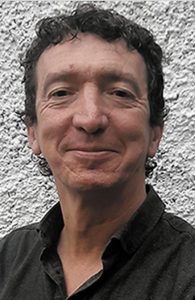
The story of the novel weaves back and forth between contemporary Cork and seventeenth-century Europe. As an Irish language novel, I made a deliberate decision that while the main characters in Cork City speak Irish with each other, they will occasionally encounter others who don’t, and at this point the dialogue will be in English – and in italics. I then kept these italics in the translation to show this aspect of the original book. I felt that this is an important commentary on modern Ireland in that, throughout the country, people are speaking Irish in our towns and cities every day – perhaps unbeknownst to those that meet them and converse with them in English. Ireland’s relationship with its own language is evolving all the time, and I sought to write a book that would reflect that.
I only write in Irish and could never imagine writing a work of literature in English. I have no problem however in my work being translated into other languages. Given that the main protagonist in the historical chapters of EL is from the Netherlands, I would even like someday to see it translated into Dutch. Ultimately, translation brings awareness of the novel to those who might not otherwise have seen it, and it may even encourage some people to read it in its original form.
Translating my own novel
While actually translating the novel myself may have had its own benefits, I cannot say that I found the process to be entirely an easy one. No two languages operate in the same way, and simple technical differences can have huge effects on the style of the language. Translating your own work has its own set of challenges in that you will be more precious about a text on which you’ve already expended so much care and devotion. Preserving the tone and character of the original is vital, but so too is the need for a richness and coherence in the translation itself. A certain objectivity must be maintained while also allowing the richness of the Irish language to flow through into the translation as much as possible.
Cork City
The contemporary chapters in the book take place mostly in Cork City, and I wanted to also use EL to paint a picture of the beautiful, vibrant and cultured place that it is. The streets, bars, cafés and shops are all the places that I grew up in, and the book begins in Ballyphehane, which is my home neighbourhood. Whether it be the mayhem of the Jazz Festival or a trad session in the Sin É, all of this is as true for me as the historical truths in other parts of the book.
EL was, in many ways, an attempt to make sense of the world that we live in. To say that our concepts of truth have been altered by the advent of the digital age would be an understatement, yet it was really always so. Our religions and politics have led us into many a blind alley. But if this novel examines our notions of truth, then it is perhaps even more relevant today than when I first wrote it. This is the ultimate inspiration for the book, and I imagine it is an aspect that we should pay continued attention to.
(c) Thaddeus Ó Buachalla
About EL by Thaddeus Ó Buachalla:
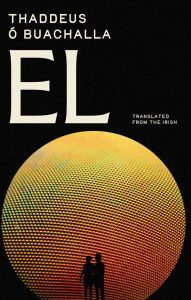
When reality itself becomes the conspiracy . . .
A Cork academic’s accidental discovery of microscopic humanoid beings living inside flies unleashes a four-century conspiracy that stretches from Galileo’s revolutionary revelations to the chaos of Brexit.
What begins as scientific curiosity becomes a mind-bending journey through hidden histories and manipulated truths. In our age of deepfakes and social media deception, EL asks the most urgent question of our time: who controls reality?
Weaving between modern Ireland and 17th-century Europe, this award-winning thriller combines literary sophistication with pulse-pounding suspense, philosophical depth with page-turning momentum. Part academic mystery, part historical thriller, EL speaks directly to our post-truth moment — a world where AI reshapes narratives, disinformation spreads like wildfire, and the very nature of truth hangs in the balance.
Translated from Irish by the author, this award-winning work captures the authentic voice of contemporary Irish literature.
This novel was first published in Irish by Coiscéim and was awarded Irish Language Novel of the Year at the An Post Irish Book Awards.
Order your copy of EL by Thaddeus Ó Buachalla online here.
And read more Meet the Author articles on Writing.ie here.


