

Carina McNally, author of Mithim, asks: What about all the other Irish women that history forgot?
I’ve written for as long as I remember. My first qualification when I left school was a City and Guilds in Media and Journalism. I went on do other qualifications including a degree in Social Studies but writing was always there. I have found many outlets for my writing over the years in various publications ranging from newspapers to literary magazines.
In the mid 2000s I won second place in a short story competition on a daytime RTE show hosted by John Creedon. We had to conjure up a tale or a dream of what happened to Shirley Valentine after the end of the film of the same name. The award was a weekend stay in a luxurious hotel in Co. Waterford. I suppose this was the first time that I had what you would call public acclaim for writing. My work was broadcast – and also on Sunday Miscellany – and it was truly a lightbulb moment for me – people enjoy my writing – it gave me the confidence to continue.
Women in History

One of my many writing pursuits over the years was a period of book reviewing and I frequently reviewed for the historical non-fiction publisher Chronos Books. As an avid lover of history, reviewing for this imprint of Collective Ink Books was a dream. The claim that they publish real history for real people is true. I have always felt that their books bring people to life in an imaginative, easy to digest way – and the fact that female historical figures make up a significant portion of their catalogue was perfect for my tastes as I was, and remain, forever hungry to read about women in history.
It quickly became obvious to me that the imprint makes a conscious effort to seek out a “herstory” perspectives and to highlight extraordinary, overlooked women in history. Two titles that spring immediately spring to mind are Catherine of Braganza, Charles 11 Restoration queen by Sarah-Beth Watkins and The Untold Story of the Kaisers second wife – An Empress in Exile – by Moniek Bloks. While reading these Chronos titles I loved getting the personal details; a peep into the boudoir, a read of their mail and ‘billet doux;, the books give great insight into both minutiae and insurmountable trauma, pulling all the punches, bundled into small readable packages. And, these titles were almost wholly about British women….
Gráinne Mhaol, Pirate Queen of Ireland
When Sarah-Beth Watkins of Chronos Books approached me to write a new angle on the story of Gráinne Mhaol Pirate Queen of Ireland, I was very chuffed; she obviously believed in my writing skills. Gráinne was an incredible woman in Irish history that was not erased out of our mosaic of heritage in favour of famous males who have a habit of pushing the women out of the history books (also usually written by men I assume.)
As there have been numerous books written about her before I was sitting at a table, thinking about how I could re-frame her story, going through the mid and late 1500s year by year and the events that framed her life. I wanted to witness what she was witnessed in her lifetime; the end of the medieval period, laws against Irish customs, laws and dress, the Reformation, the destruction of the monasteries as decreed by Henry VIII, martial law. The traumas of the times she lived through kept me awake at night.
Irish Women Forgotten by History
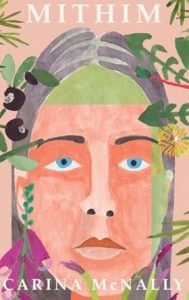
One day I was compiling my 1500s year diary and, I thought – hold on – a lot has been written about Gráinne. What about all the other Irish women that history forgot? What happened to all these women when their men were butchered out of existence under martial law? Suddenly the character of Mithim came to me, but oddly enough she did not appear in the time of Gráinne Mhaol, instead almost 100 years later. So I’m sorry Sarah-Beth, the Gráinne Mhaol book was abandoned in favour of a novel on Wexford woman Mithim, I hope you can forgive me!
Many of the women I had read about in the Chronos books – as in Sarah-Beth Watkins The Tragic Sisters of Charles 1st – shockingly never even made it to the age of 30. From birth they faced uncertain futures due to complexity of political upheaval at the time of their untimely birth. Mithim came to me as just this, a young woman, uncertain of her life and future. I was desperate for her to survive, and although she turns to nature and the Cailleach, it is her inner resilience from her maternal lineage that shines through.
The Celtic Tree Calendar
In writing the book I decided to frame it in the context of one year, using dates of the Celtic Tree Calendar, which includes not only trees but plants such as vine, ivy and reed. The beliefs, cures and mythology of the native Irish plant associated with each month weave through, guiding Mithim through her journey, which, eventually brought her to a Mercier Press reader’s desk, and peaked their interest for which I am eternally grateful.
I spent years writing reading and researching on the 17th century and I hope that this comes across in the book – and apologies to the experts – some fashions and dietary choices are out by a few years – I’m aware of this but decided to keep them in just to add to the tapestry of the story.
A Release, a Healing
I had a strange experience a few days after the book was published and out in the world. I was driving my car home from the supermarket, thinking about how Mithim’s story is now there for all to read, a story of 17th century Ireland now passed onto a generation of new readers, when the amount of trauma she suffered suddenly hit me. I felt tears on my cheeks. Unknown to myself, had I been coping with her trauma all the years while writing her story; now its out there it’s kind of a release, a healing.
(c) Carina McNally
About Mithim by Carina McNally:
Wexford, 1657. Ireland is on its knees. Eight years after Cromwell’s army burned Killenea Castle to the ground, Mithim McMurrough – daughter of a Gaelic lord, healer and last keeper of her family’s secrets – is living alone and in hiding in the depths of a Wexford forest. The soldiers are moving closer. And the past is closing in faster still.
Fierce, lyrical and steeped in Irish mythology, the Celtic tree calendar and the forgotten wisdom of the Gaelic healing women, Mithim gives voice to a noblewoman who refused to disappear quietly into the wreckage of conquest – who carried her people’s knowledge into the dark, and who will risk everything to find out who survived.Meet the bould Mithim – the Irish woman history forgot.
Order your copy of Mithim online here.
And read more Meet the Author articles on Historical Fiction here.


