

Jeananne Craig, author of The Life Swap, on ‘finding the funny’ – using humour to explore difficult subjects . . .
My debut novel The Life Swap opens with two grief-stricken sisters on the morning of their mother’s funeral, and goes on to tackle topics including single parenting, unemployment, and family estrangement.
Doesn’t sound like a barrel of laughs, does it?
And yet, from the moment the idea came to me for these two fractured siblings who switch lives temporarily, I knew it could only be told through a comedic lens.
Sarah and Sinead, the two sisters in the book, are from my hometown of Derry. It’s a place where black humour has prevailed – been sharpened, even – during challenging times, as depicted so well in Derry Girls.
Thanks to Lisa McGee’s show, I knew the jokes and dialect in my own story would translate to readers beyond the North. I was delighted when my manuscript was awarded Unpublished Runner-Up at last year’s Comedy Women in Print Prize in London.
Finding Light in the Shade

Of course, finding light among the shade isn’t a uniquely Irish trait. It’s universal. As Dolly Parton’s character puts it so well in the Louisiana-based Steel Magnolias, ‘laughter through tears is my favourite emotion’. It does feel though, that we’re particularly good at it on this island – especially here in the North.
Sarah and Sinead were born in the 1990s, and are too young to remember the Troubles. But both display that Northern dry wit and sharpness, forged not just by where they were born, but by the struggles they’ve faced in their young lives.
I’ve always found the dynamic between sisters to be riveting, too, and couldn’t wait to explore that fierce love and rivalry on the page.
The Life Swap
In The Life Swap, there are bigger, deeper issues at play than the usual sibling bickering –overburdened Sarah can’t forgive Sinead for not helping enough when their mother Bernie was sick, even years after her death. Meanwhile, reckless Sinead sees her big sister as a martyr, and resents how judgemental she can be.
I knew there was delicious comedy potential in plunging this chalk-and-cheese pair into each other’s lives, homes and friendships. Would it repair old wounds, or completely nuke their already rocky relationship?
When we first meet Sarah in the Prologue, she’s standing over Bernie’s open coffin in Derry, desperately trying to track down an AWOL Sinead before the undertakers screw the lid on.
There are glimpses of humour amid the anguish, as with so many Irish wakes. We see Sarah grow increasingly annoyed by the drunken mailbox greeting on her sister’s phone, while their aunties are out in the hallway, ‘fussing over who’d got what in the Prayers of the Faithful’.
Chapter One begins ten years later. Sarah is now a solo parent and out-of-work actor in Dublin, with expensive roof repairs looming. Belfast-based Sinead, meanwhile, is on the cusp of losing her job, and her housemates, thanks to her partying. She also owes her sister a huge favour for bailing her out many times.
When Sarah lands an exciting film role in Belfast, Sinead offers to look after her young niece and nephew in Dublin, while Sarah moves up to her house share (and, of course, covers the rent). Strapped for cash and with no other childcare options, Sarah reluctantly agrees.
What could possibly go wrong?
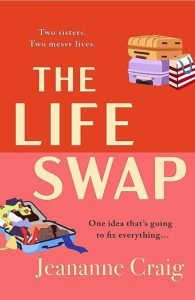
What could possibly go wrong? A lot, of course!
Small children can also be a great source of laughter, and I really enjoyed depicting Sinead’s shock as she discovers how chaotic looking after two six-year-olds can be.
Sinead meeting Sarah’s eclectic group of ‘mum friends’ was another opportunity to add colour and levity. (‘Was this what happened when you had children?’ Sinead wonders. ‘You just had to forge alliances with whoever else had pushed out a baby within a one-mile radius?’)
While Sarah is more serious by nature, there was scope for lightness too. Including some awkward flirtation with a handsome stranger she meets on set, and a few alcohol-fuelled evenings with Sinead’s housemates.
Humour as a Means to an End
Really, though, the humour is a means to an end in The Life Swap. It’s about two sisters, damaged by grief and bound by love, rebuilding their lives. Over the course of the novel, we see Sinead start to ‘wise up’ as we say in Derry, and Sarah rediscover her creative, fun side during filming.
I didn’t want to make life too easy for the sisters though; dropping in fresh challenges and some potentially relationship-ending arguments every time scores seem to be settling.
I have to confess I did relish writing the row scenes, where Sarah and Sinead cover old and new grievances with vicious aplomb.
I tried to pepper even their most epic fights with humour and irony to vary the pace. For example, during their most heated exchange (no spoilers over the outcome!), Sarah’s six-year-old son wanders in asking for an ice-pop, and both sisters take a pause for verbally mauling each other to speak sweetly to him.
No Laughing Matter
That said, some moments in the book are no laughing matter. As a first-time novelist, I had to learn to strip back the humour at times, to rein the jokes in and let the emotion come through on the page.
I wanted the grief each sister feels to be painful, sometimes crippling, even long after their mother’s passing. Trying to inject jokes at these moments would have diminished the emotional intensity.
I took on board some advice from a friend who, after reading an early draft, reminded me I didn’t need to insert two or three funny gags in a row, when one was plenty. My wonderful editor at Hachette Ireland, Joanna Smyth, also diplomatically pointed out times when perhaps more insight into a character’s emotional state was needed, rather than another laugh.
Now The Life Swap is out in the world, readers are meeting these messy, loving sisters for themselves.
The biggest thrill for me is having people tell me they laughed or cried with my characters. Or even better, did both. Because, like Queen Dolly, laughter through tears is my favourite emotion.
(c) Jeananne Craig
About The Life Swap:
Two sisters. Two messy lives. One idea that’s going to fix everything…
No plans, no responsibilities – Sinead’s ‘living the dream’ in Belfast. Really, she’s been fired, her friends are fed up with her, and her judgy big sister won’t answer her calls.
Single parent and out-of-work actor Sarah has just found out urgent repairs to her house in Dublin are going to cost a fortune. So she doesn’t have the energy to deal with her immature sister Sinead, who only ever phones when she wants something.
When Sarah lands a high-paying role 100 miles from home, Sinead has a brainwave: Sarah can stay at Sinead’s houseshare while filming, and Sinead will move into Sarah’s place to take care of her kids. Problem(s) very easily solved!
Stepping into each other’s lives isn’t quite what they expected though. As Sinead struggles with the non-stop chaos of parenting, Sarah rediscovers her rebellious streak – and how fun a crush on a handsome stranger can be. This summer the two sisters might finally start to understand each other. But will it be enough to fix everything?
Order your copy of The Life Swap online here.
And read more Meet the Author articles on Writing.ie here.


