

Editor Tara MacLeod on the publication of an outstanding new anthology of stories from multi-generational Irish women writers.
No women……?
Despite the significant role played by women such Anges Farrelly/Úna Ní Fhaircheallaigh, Bríd Ní Chinnéide, Norma Borthwic/Bhortuic, Úna Dix, Brighid Ní Loingsigh, Helena Concannon and others as editors, collectors and translators, males overwhelmingly dominated the Irish-language literary scene during the Revival, Free State and post-World War II years. For whatever reason and circumstances–beyond the usual political and socio-cultural factors – women spurned or felt shunned from writing novels and short stories in favour of drama, translations and poetry. Female writers existed, but as exceptions, they prove the rule. The past 20-odd years have seen not only a swell of Irish-language stories in Irish by women in literary journals but, correspondingly, a rise in single-author collections.
Stories in the Anthology
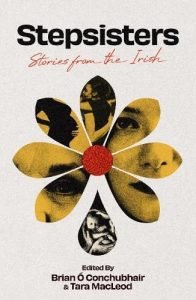
The stories published by the multi-generational women writers in the new anthology Stepsisters: Stories from the Irish, edited by Tara MacLeod and Brian Ó Conchubhair and published by Mercier Press, serve up a wide variety of forms and styles: from detective to postmodern, from magic realist to feminist. This new path-breaking collection offers readers a taste of the variety and vigour found in this exciting wave of creativity. The selection includes ghost stories, twist in the tale endings, literary stories, humour stories, stories set in rural-Irish-speaking Ireland, English-speaking Ireland, Northern Ireland, urban Ireland and abroad. These voices address current ethical dilemmas, controversies, international crises and age-old dilemmas: human relationship between mothers and daughters, husbands and wives, partners, suicide, pregnancy–planned and unplanned, wanted and unwanted – raising children, betrayal, the challenges of aging, travel, single-mother families, children with intellectual disabilities, and death and birth in all its shades. The stories entertain, concern, alert, protest, illuminate and perplex readers.
Chaos Abounds
In Biddy Jenkinson’s fictional world, chaos abounds; women deceive men; priests deceive fellow clergy; strict adherence to rules results in suffering and hardship; and paradoxes abound. Better known perhaps, as a poet, Jenkinson’s narrative exuberance and imaginative power — whose stories avalanche off the page to sweep the reader, and plot, along in a riotous tour of sheer narrative power. Detective Dineen, a justice-seeking (ex) Jesuit, offers her a form to explore various scenarios, play with language and reconstruct historical events. “Dineen and the Great Redemptorist” parodies the pomposity and unintended consequences of human action when the threat posed by an unexpected pregnancy starts a comedy of errors and unforeseen consequences of epic proportions; a crusading priest’s campaign for moral purity leads to a sudden rise in the birth rate in North Kerry.
If Biddy Jenkinson summons up a tornado of imagination distilled with style, craft and linguistic intelligence, Katherine Duffy offers more restrained, more classical, and more formal stories. Set in the contemporary quotidian reality, these stories are more restrained, but equally distinctive. Eithne Ní Ghallochair, a new and exciting talent, exhibits a delicate prose style that–in the original Irish – targets the ear. Réaltán Ní Leannáin’s urban stories, reflective of contemporary urban experiences, remain rooted in recent history, offer discrete insights into cultural and political affairs, and record technology’s ever-increasing impact on human activity and behaviour. Deirdre Brennan, better known perhaps, as a poet, writes stories that may seem initially simplistic at a superficial level, yet on deeper examination, delve into the ethical and moral issues of our time.
Odyssey
Róise Ní Bhaoill’s “Odyssey” turns on a confessional moment in which a mysterious migrant shares his shame and unburdens himself to a stranger – also waiting in a dimly lit waiting area to board a night bus – to find reconciliation and grace. This story explores the deadly challenges posed in extremist countries and the risks involved in escaping persistent persecution, poverty, and precarity. Majella Ní Dhomhnaill’s fiction world, with rare exception, offers little hope or comfort. Death, despair, thwarted hopes, and disappointment course through her stories. Her themes range from a child’s death, suicide, murder, childish cruelty and tragic deaths to humor and fantasy. Here, McDonnell addresses euthanasia, human cloning, suicide, teenage pregnancy, and sexual abuse. Her stories conclude in a dramatic climax and an irreparable break, a moment which divides the past and future.
Born in Glasgow, Scotland, but raised in Gweedore, Co. Donegal, Michelle Nic Pháidín’s “Fish Eyes” provides a child’s perspective on a family tragedy. Unobtrusively and gently, she reveals the child’s innocence, naivete, hope, earnestness, sense of wonder and curiosity. “Maggie, Girl and the Storm,” builds towards a sense of a domestic serenity, only to be shattered. These stories speak for themselves. In a myriad of manners, means, styles and senses, they offer a mosaic of contemporary Ireland in the first quarter of the 21st century. These stories introduce readers to two stories by six of the finest practitioners of the short story form in Irish. The editors hope these stories will entice readers to seek the authors’ respective collections and those who follow in their footsteps.
(c) Tara MacLeod
About Stepsisters: Stories from the Irish
Eight writers. Sixteen unforgettable stories. Translated from Irish for the first time.
Bold, unflinching, and impossible to ignore Stepsisters showcases the depth and power of contemporary Irish women’s writing.
Featuring stories from Éithne Ní Ghallchobhair, Deirdre Brennan, Róise Ní Bhaoill, Biddy Jenkinson, Katherine Duffy and Réaltán Ní Leannáin.
Order your copy of Stepsisters online here.
And read more about writing short stories on Writing.ie here.


