

There are not many days that are as exceptional or as captivating or evocative as Bloomsday. This year heralds the celebration of its 122nd anniversary. It proclaims the most extravagant celebration of a unified relationship. It is a deep expression of a perennial love that still blooms with every passing year. It is a product of the relationship that developed between Nora Barnacle and James Joyce.
Nora Barnacle and James Joyce
Their story deserves to be narrated for that is how Ulysses was constructed and born. Built on the altar of a relationship that was passionate, unpredictable, and laden with heavy pain and suffering yet it was an example of fidelity and authentic marital commitment -although it wasn’t a sacramental or conventional arrangement they were wed in their minds and hearts and souls. They did however marry decades after. This was solely done to protect their estate and finances. The couple married on July 4th 1931 in London.
It all began as every fairytale narrative does when the couple met on June 10th 1904. Nora was just 20 a Galwegian working as a humble chambermaid in Flynn’s Hotel in Dublin. Joyce was 22 at the time. Their initial romantic liaison took place on June the 16th. From then onwards their passion, lust, spark and connection deepened this was the initiation of a relationship that would last for almost forty years – literally until death did them part when Joyce died in Zurich on 13th January 1941.
Trials and Triumphs
Four months into their relationship they fled from the constrictions of Dublin generating scandal because what they did was unorthodox to the culture at that time in history as they sought respite and reprieve from the shackles binding them to Dublin. They eloped to continental Europe- Trieste, Zurich Paris and lived in instability and impoverishment and in a sort of bubble of isolation. Like with any relationship Joyce and Barnacle had their trials but triumphs and joys too.
They had two children. Giorgio Joyce and Lucia Joyce. Giorgio Joyce was born on July 27th 1905 and Lucia Joyce was born on July 26th 1907.
Through Nora Joyce found stability and focus to write. Joyce suffered with degenerative blindness amongst so many other things. He was unable to cope with Lucia’s diagnosis of alleged schizophrenia. She was a little different: a splendid and professional dancer, she abounded in creativity and was ahead of her time but was interned in asylums until she died in 1982. They shared a profound closeness and this shattered Joyce.
Lucia’s relationship with Samuel Beckett seemed to drive her into the abyss of instability of fragile mental health that deteriorated in her 30’s. She was treated by the acclaimed psychiatrist Carl Jung for a time.
Joyce and Nora certainly blossomed as a couple and the spark they ignited never waned they exchanged the most explicit, graphic and passionate erotic letters that were deemed to be pornographic and shocking.
The character Molly Bloom is certainly fashioned from Nora who certainly supplied Joyce with his insight into femininity because it is only a woman that could have unveiled what being a woman is about in terms of physique, trains of thought that are dispelled throughout Penelope the final chapter of Ulysses.
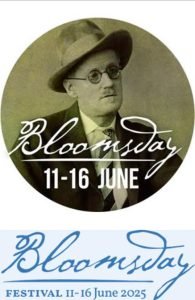
Bloomsday
Indeed, Bloomsday is truly a dedication to Nora and to Joyce. The name Bloom is deliberately chosen as a play upon words to draw and intrigue the reader.
In fact, so much of it is autobiographical. Stephan Dedalus is a retrospection for Joyce gazing back with sorrow grieving for his loss of youth and it is a reflection of his own unresolved issues articulated through Kinch a.k.a. Stephan Daedalus.
We rise on Bloomsday in Martello tower in Dublin’s Sandycove with Stephen Daedalus and his companions as they breakfast. The novel concludes and sets in Eccles street in a defiled marital bed with a wonderful stream of consciousness oozing forth reminiscing on a woman examining a life lived to the full. Speaking a dialogue that only a woman can.
Bloomsday invests itself in the many themes of life. We explore the everyday conversations, deeds, dilemmas, quandaries and mysteries of life.
In fact, I believe that Ulysses is a commentary and an examination of life and all that it brings to an individual. It is a gesture and an opening for us to cling on to the promise of life despite our traumas, unresolved issues and disappointments and problems it is a celebration of life in the ordinary.
Love in all its guises
Fundamentally, the core message of Bloomsday is that of love in all of its guises; Eros, philia, storge and agape. Bloomsday explores bereavement, the loss of a child. It opens festering wounds of unresolved issues, a marriage in shambles, embracing every moment of the day. The theme of religion and the shenanigans of friends and acquaintances, infidelity, loss, shattered dreams and aspirations and all the tokens of life.
I think that Joyce wrote Ulysses so that we would make the most of life and what it brings to us. Bloomsday embraces life and preserves it and records it as it is. Though it is experimental and enigmatic and nonsensical at times. It is powerful. It will continue to preserve life and even today we celebrate Bloomsday 122 years later it still blooms faithfully every year on June 16th.
(c) Niamh Holohan
Read more from Niamh on Writing.ie here.
And more on Bloomsday 2026 here.


