

Author Warwick Wise: As a journalist, your instinct is to be clear, concise and truthful. As a novelist, all three adjectives are up for debate.
I once listened to the Scottish writer Andrew O’Hagan, at a literary festival, talking about the weeks and months of research he had put into his latest novel – hours spent sitting in on court cases, infiltrating sweatshops, hanging out on street corners with gang members. I asked him, later, why he had turned this material into a novel at all, rather than just writing one of the pieces of long-form reportage of which he’s already such a master. ‘Because,’ he told me, ‘sometimes I want to write the thoughts of someone alone in a room.’
Nice line. The question of whether a project should be fictional or non- felt pressing to me, because I was a reporter wrestling with the same issues over my own first novel. As a journalist, your instinct is to be clear, concise and truthful. As a novelist, all three adjectives are up for debate. And some ideas seem to demand that sort of creative instability.
Frustrated novelist
Journalism is, I would say, largely a profession of frustrated novelists, and there are few grizzled old hacks who don’t have a draft of something stuffed away in their desk drawer. You can see why – both disciplines are about finding creative and interesting ways of telling stories, about communicating some situation or some circumstance to others as vividly as possible. A lot of people go into journalism precisely because they want to write, and that seems like the best way of being paid to do it. (Which it is, as long as you don’t expect to be paid very much.)
It means that journalism can, in some ways, be good training. Working for the BBC or AFP, I was given a story in the morning and knew I’d be on air that afternoon – that’s a pretty big incentive to get on with it. Associating getting words down on paper with getting paid is no bad thing when it comes to writing fiction: look at any advice for aspiring writers, and you’ll see that it all boils down to the injunction to sit down and do it. Journalists know that one all too well.
In other ways, though, the differences are daunting. If I wanted to write an article or make a news film about someone, I’d go and see them, or at least call them up. But the people in my novel – though many of them were real – all lived in the eighteenth century. You can’t set up a business lunch with William Blake, or Facetime Mary Wollstonecraft (more’s the pity).
The importance of research
Hence the importance of research. If I couldn’t actually speak to these people, I could read the letters, articles and novels of people who did, which seemed like the next-best thing. In fact, writing for me often feels primarily like a research project, with the writing only emerging as a welcome side-effect. It’s not just learning about individual people, places, or events – it’s also getting a feel for the language, understanding the terms in which people thought.
Admittedly, this can be taken too far, a point my wife made quite forcefully when the two-hundredth package from abebooks.com turned up on our doorstep. It’s a particular danger for historical novelists, I think (though I always privately thought of my own book as a kind of anti-historical novel). The works of Hilary Mantel, which I do admire hugely, sometimes seem so tethered to the historical facts that you find yourself vaguely hoping for Martians to land on the Tower of London in chapter twelve.
Assimilating the atmosphere
For me it was less about lifting events or phrases than about assimilating the atmosphere of the time. When I first began writing scenes, I realised I simply didn’t know enough to get started. I would picture two people in conversation: OK, but what would they be wearing? How was the room decorated? What could they hear out of the window? To build a fictional castle, you need a solid foundation of fact.
Still, important as those foundations are, it’s the castle that matters. It’s often precisely those areas not served by the historical record that seem attractive to a novelist. That was certainly the case for me; I gravitated to the 1790s specifically because it’s the period where we know the least about my characters: letters were burned, relationships covered up by a nervous posterity. As a novelist, that’s what you want – the space to invent.
The importance of language as a novelist
There’s one other thing about moving to fiction from journalism, and that’s the language itself. English is an extraordinarily powerful resource. Sometimes journalism, even at its best, can feel like driving a sports car at thirty miles an hour round an industrial estate. That’s great and doing it well is crucial for society. But still. Sometimes it’s nice to get out beyond the city limits and put your foot down.
(c) Warwick Wise
Website: https://www.warwickwise.com/
About His Devilish Art by Warwick Wise:
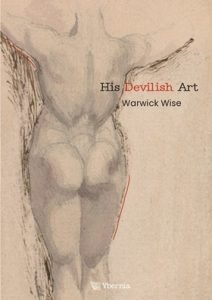
The Swiss-born painter Henry Fuseli is at the height of his fame, newly married, and on the verge of being elected to the Royal Academy. But as the ‘Wild Swiss’ works on his pictures of dark, dreamlike eroticism, he is drawn into a network of radical thinkers who are eagerly following the revolutions in America and France – among them the pioneering feminist Mary Wollstonecraft.
As Fuseli struggles to find his way in a London seething with fog, streetwalkers, dismal poverty and staggering displays of wealth, the stage is set for a showdown between Enlightenment reason and the relentless pull of human desire.
Order your copy online here.
And read more Resource articles on Writing.ie here.


