

Melissa Leanne Owen, author of the recently published Crimson Spire: When I write horror, I don’t look for monsters. I look for moments that don’t sit right.
The Moment That Stayed
It was a morning like any other. Grey sky, coffee in the cup holder, the same route I’d taken for years. I remember how automatic it all felt, how easily I could drive that stretch of road without really seeing it. Then my tyres hit something sharp which brought me out of that semi-consciousness. The crunch made me jolt. Tools and debris were scattered across the road. It didn’t fit.
And then I saw him.
A man on the bridge, still against the morning light. For a moment I thought he was fixing something, maybe looking down at the road. Then he stepped forward.
When he jumped, the world seemed to lose sound. Everything slowed down – the air, the cars, even my heartbeat.
That moment stayed with me. Writing about it later was the only way I could make sense of what I’d seen. It made me realise how thin the line is between ordinary life and the uncanny and how quickly the familiar can fracture. That, I think, is where horror begins. Not with the supernatural, but with that sudden awareness that reality isn’t as solid as we think.
Noticing What Doesn’t Belong
When I write horror, I don’t look for monsters. I look for moments that don’t sit right. The odd details. The sound that should be comforting but isn’t. The light that flickers even when the bulb is new.
It starts with paying attention, not just to what’s there, but to what doesn’t feel quite right. Horror lives in the gaps, the in-betweens.
Try describing something perfectly ordinary, then tilt it slightly. The dripping tap becomes a pulse. The wind against the window sounds almost like whispering. A child’s laughter echoes in an empty park and suddenly it’s not innocent anymore.
That’s what I love about this genre. It teaches you to see. To notice what others don’t. And once you start noticing, you can’t switch it off.
The Breath Before It Breaks
Suspense is in the silence before the scream. The held breath. The small hesitations that make your reader lean in.
When I’m writing a tense scene, I think about rhythm. I let sentences stretch and contract, just like a heartbeat does when fear starts to rise. Long and flowing one moment, clipped and sharp the next. That shift, that imbalance in itself, creates unease.
Sometimes I’ll ask myself what happens if I wait just one beat longer before something moves? That’s often where the real tension hides.
You don’t need to rush horror. Let it breathe. Let the reader sit in the stillness until they start imagining the noise themselves.
When the Darkness Feels True
 The stories that stay with me, both as a reader and a writer, are never about the ghosts. They’re about what the ghosts represent. Guilt. Desire. Grief. The feelings we try not to look at too closely.
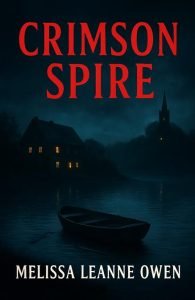
When I wrote Crimson Spire, I didn’t set out to write about trauma. But it crept in through the cracks. The real horror wasn’t the cult or the haunting, it was the weight of what my characters carried inside them, the things they’d rather not remember.
If horror has a purpose, it’s to show us the truth we’ve been avoiding. That’s why I think it connects so deeply, because fear strips everything else away. It’s raw. Honest. There’s no pretending when you’re afraid, you can’t hide it.
When you write from that place, from something real you’ve felt or lived through, readers sense it. They feel it.
Writing Fear with Care
People often assume horror writers must be cold, dark, strange or detached, but I think it’s the opposite. We feel everything too much. We notice too much. And that’s what makes the writing work.
Horror, when done well, isn’t about cruelty. It’s about compassion. It tells your reader that you’re not the only one who’s afraid.
When I write, I’m not trying to shock anyone. I’m trying to walk alongside them, through the dark hallways, across the creaking floors, until they might just realise they’ve been here before and what might be haunting them may actually be something human. Something that lives within them.
Where Horror Begins
Everyday life is full of small disturbances if you stop long enough to notice them. A door that won’t stay open. A phone that lights up with no message. The sense that something has shifted, even though everything looks the same.
That’s where horror begins. Not in grand gestures, but in awareness. In the ordinary made strange.
As Halloween, Christmas and 2025 draws to a close, I find myself thinking more about that morning on the bridge, how one unexpected moment can rewrite the world around you.
That’s why I write horror and suspense. Because it reminds me that nothing is fixed. That there’s beauty in the unease. And that sometimes, the scariest thing isn’t what’s waiting in the dark, it’s really in what we discover about ourselves when the light comes back on.
(c) Melissa Leanne Owen
https://www.instagram.com/melissaleanneowenauthor/
Facebook – Melissa Leanne Owen – Author
TikTok – @melissaleanneowen
Goodreads – Melissa Leanne Owen (Author of Crimson Spire)
About Crimson Spire by Melissa Leanne Owen:
Jamie Williams thought his demons were confined to his past—until a flicker on his screen cracks reality itself. A voyeur of the dark web, Jamie stumbles into a chilling online realm where messages shock more than just the mind, and cryptic usernames seem to foretell death. As those around him begin to vanish, haunted by their deepest fears, Jamie finds himself tangled in a web of horrific visions, mysterious deaths, and a shadowy cult that reaches decades into his bloodline.
From 1980s beachside rituals to the eerie glow of modern screens, Crimson Spire unravels a terrifying legacy of sacrifice, possession, and identity buried beneath layers of forgotten memory. As malevolent forces cross from myth into flesh, Jamie must uncover the truth about who he is—and what he carries inside—before the final soul is claimed.
A darkly hypnotic tale of inherited evil, shattered identities, and the terrifying price of desire, where reality collides with horror, and where every fear has a face.
Order your copy online here.
And see here for more writing on horror on Writing,ie.


