

From Cosmetic Claims to Crime Fiction: How Science, Storytelling, and the Zoe Blaise Mysteries Collided by Tess M. Calloway
When most people hear “cosmetic science,” they think of ingredients, lab coats, and safety. Fewer realise it’s also a field rich in storytelling, where claims must be carefully framed, data interpreted, and language as influential as chemistry. For nearly forty years, I worked in this realm—evaluating skincare claims, validating research, and translating science into consumer trust. My career centred on accuracy, regulation, and restraint. Over time, I became increasingly aware of a different truth: cosmetics are sold not just for their function but for desire. And desire holds great power.
The beauty industry relies heavily on trust. Once built, that trust can be leveraged—sometimes responsibly, sometimes not. I observed how evidence could be manipulated to suggest more than it proved, how innovation could obscure the truth, and how ethical boundaries widened as marketing outpaced oversight. Nothing was overtly illegal, nothing easily challenged. Yet, cumulatively, it was concerning.
This discomfort didn’t fit neatly into academic papers or regulatory reports. However, it found expression in fiction.
Why Crime Thriller Fiction?
In 2019, I started writing The Zoe Blaise Mysteries using the pseudonym Tess M. Calloway. This pseudonym was chosen intentionally — not to hide my identity, but to set a boundary. It helped me distance myself from my professional persona and delve into darker aspects of an industry I knew well, without blurring the lines between fiction and reality or contributing to misinformation. Crime thriller writing gave me narrative freedom, allowing me to pose questions I couldn’t ask publicly and to explore consequences beyond regulatory limits.
What if marketing language became a tool for harm?
What if behavioural science was exploited to manipulate rather than inform?
What if the systems meant to protect consumers secretly failed them?
These “what if” questions are the heart of the series.
Cosmetic Science: Enter Zoe Blaise
Zoe Blaise isn’t a scientist; she’s a financial fraud investigator skilled in tracking incentives, patterns, and money instead of molecules. This perspective is deliberate. Zoe views systems like outsiders do: with critical scepticism rather than reverence.
Her work in the beauty industry isn’t because she understands formulations but because she spots common warning signs—secrecy, conflicting incentives, and corporate strategies that view risk as collateral damage.
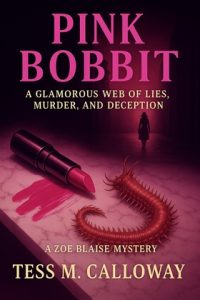
In Pink Bobbit, the series opens with a grotesque crime tied to cosmetic products. What initially appears sensational gradually reveals an internal logic rooted in ambition and exploitation. As Zoe digs deeper, laboratories, supply chains, and boardrooms replace crime scenes, exposing how beauty can become both weapon and motive.
Cold Indifference widens the scope, shifting from individual crimes to systemic behaviour. The novel explores how clinical data, consumer psychology, and corporate insulation can enable harm at scale — not through force, but through seduction and addictive dependency.
Digital Facade pushes further still, introducing AI, behavioural modelling, and tech-driven beauty platforms. A fictional Silicon Valley billionaire promises “personalisation,” but what’s really at stake is influence — the ability to shape perception, desire, and self-worth algorithmically. While exaggerated, the science underpinning the story is firmly grounded in real developments already underway.
Cosmetic Science: Writing at the Edge of Reality
I don’t create impossible science. Each formulation, trial design, and claim in the series is based on current technologies or industry standards. The tension stems from proximity — how near fiction is to reality before it feels unsettling.
For me, that’s where the most gripping stories emerge.
The Zoe Blaise Mysteries exist between proof and persuasion, data and desire. They capture the contradictions I’ve observed over decades: brilliance paired with hubris, innovation mixed with impatience, and ethics falling behind ambition.
At its core, the series isn’t about cosmetics. It’s about systems — and what happens when the stories we create to market products start to influence behaviour rather than serve people.
That question keeps guiding my work, both as a scientist and a writer:
What occurs when the science of beauty ceases to protect consumers — and begins to control them?
(c) Tess M. Calloway
For more information about Tess M. Calloway and the Zoe Blaise Mysteries , visit: https://tessmcalloway.com
About Pink Bobbit: A Zoe Blaise Mystery
Pink Bobbit is a thriller that sits at the intersection of science and subterfuge, unravelling the polished façade of the cosmetic world to reveal a far more sinister reality. When a financial fraud analyst is found dead in a Welsh hotel, two words scrawled in lipstick—Pink Bobbit—set off a chain reaction that pulls consultant fraud analyst and reluctant sleuth Zoe Blaise into the heart of a sinister conspiracy. As more victims surface and all evidence points toward a toxic cosmetic with deadly effects, Zoe must navigate a web of counterfeit science, corporate betrayal, and unspoken loyalties.
But the closer she gets to the truth, the more the case begins to echo with the threat of her becoming the next target. Pink Bobbit peels back layers of corruption, where power, vanity, and revenge blur the lines between glamour and death. In a chilling blend of noir and thriller, manipulative ingredients, drag clubs hiding secrets, and a killer with a twisted vendetta, lurks the enigmatic puppet masters Zoe cannot yet expose.
Inspired by real-world issues in cosmetic science and the beauty industry, Pink Bobbit explores themes of deception, revenge, and the manipulation of truth in a world obsessed with perfection. It combines forensic intrigue with high-stakes glamour against a vivid backdrop of drag clubs, elite laboratories, and shadowy global cartels.
Order your copy online here.
And see here for more Resource articles on Writing.ie.


