

Children’s author E.R. Murray on the many mistakes she’s learnt to avoid over the past decade of her writing journey . . .
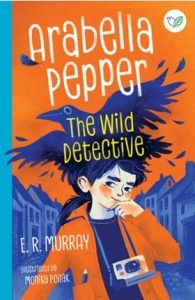
I’ve just launched my fifth children’s book – Arabella Pepper, The Wild Detective (Natural World Publishing) – and I’m still pinching myself. The support has been mighty, and even though it doesn’t get any easier, writing for children remains as joyous as ever.
I’ve been a professional children’s writer for a decade now and I can honestly say that I love what I do. As well as the writing side, part of my job is to get in front of my readers in schools, libraries and festivals, and encourage children to discover a love of reading for themselves.
Another part of my job is to read manuscripts, facilitate workshops and mentor, encouraging and support new writers as they navigate their writing and the wonderful world of writing children’s books. After all, we will always need more writers and more stories. There is room for everyone – but quality is key. Especially when writing for a young audience.
I firmly believe that we are always learning, evolving, and relearning at every stage of our writing career, but over the last decade I’ve acquired some solid advice that has helped me on my writing journey and might help you on yours too…
Mistakes to Avoid
Mistake to Avoid #1: Writing for Children is Easy / Easier Than Writing for Adults
Writing for young people is not like learning to read. You don’t start with a picture book, then an early reader, then build your way up through chapter books and novels, eventually progressing to a novel for adults – though you’d be surprised how many people think this to be true. Just ask any children’s writer how many times they’ve been asked ‘when are you going to write a proper book?’ to get a sense of how common this misunderstanding is!
Children are discerning readers. They deserve sophisticated language and flawless pacing. They deserve wonder, adventure, and excitement. They deserve complex, flawed characters who are facing challenges, situations, and emotions that reflect the world they live in – which means the books they read need to be of the highest quality. So, although writing for children is, and should be, fun, it still requires the same amount of dedication and craft from the writer as any book for adults.
Mistake to Avoid #2: I Don’t Have Time to Read / I Loved Enid Blyton as a Child (But Haven’t Read a Children’s Book Since)
 Writing should be fuelled by a love of reading and story – so why wouldn’t a writer make time for reading? It’s essential, and part of learning the craft.
One vital mistake that many new writers make is to not stay up to date with the children’s publishing world. I regularly meet enthusiastic writers who want to write for children, yet haven’t read a children’s book since their own childhood. And my question is always this: if you’re not reading children’s books – why are you writing them?
Having been inspired by Enid Blyton as a child might provide a sense of how it feels to fall in love with books and reading as a young reader – but it won’t give you a sense of the wealth of children’s books out there or the possibilities available to you as a children’s writer.
Knowing what is already published, what has won awards and sold in droves across the globe, what works for young readers and what doesn’t, gives you a strong sense of the breadth and quality of children’s books in print. It also highlights where there may be gaps or a lack of representation.
Reading current children’s books can open a world of possibilities for you and the stories you want to tell, which makes it the perfect resource to inspire and inform your work. So go and read as widely and hungrily as you can!
If you’re looking for inspiration for your next read, the Children’s Books Ireland Reading Guides and Discover Irish Kids Books and are both great starting points.
Mistake to Avoid #3: It’s All About the Lesson / Moral
Children’s fiction has come a long way since John Newbery first campaigned for children’s books to be entertainment, rather than instruction. Stories for young readers are not intended to teach or preach – they are written for children about children. Their life experiences, their interests. Their world views.
Modern children’s books explore all-important themes such as love, loss, friendship, grief, shame, but a novel is not a textbook or manual – it’s a story. A living breathing story that, once it’s left your hands, is at the mercy of the experience and interpretation of the reader. It has to be believable, relatable, and above all, fun!
This means that the decisions a writer makes when writing for children should always be for the good of the story. Your narrative should be well-paced. Punchy. Deep. The characters need layers and believability – they need challenges that are relatable to the reader. It should be all about the story and approaching that story with wonder. Fun. Escapism. Entertainment.
Yes, we learn from reading – we are exposed to other ideas and viewpoints, new places or time periods, historical figures or happenings – but in emotive, complex ways that develop our sense of empathy. Any learning happens as part of the journey, as a result of being immersed in a wonderful story.
Mistake to Avoid #4: I’m Writing a Book for Every Age Group
There’s no gentle was to say this, but no, you’re not. Books are shelved where readers can locate them – in bookshops, libraries, school libraries and at home. Your children’s book has an intended age range. That’s not to say someone older or younger won’t read it, but that will depend on many factors including reading ability, taste, and access to books – all factors that are outside of your control.
So, if you want to write for young people, you need to know your age groups. A good place to start is this article on age categories and word counts for children’s books, by author, Niamh Garvey. I think it’s also worth mentioning here that children’s books are sometimes spoken of as a genre, but they are not a genre. Books within each age group will cover a wide range of genres, from science fiction to biography, historical fiction to fantasy. My advice would be to read as much as you can, study the shelves, and learn about genres too.
Mistake to Avoid #5: I’m Doing This Alone
Writing can be a lonely occupation – when I’m writing, I need to work in silence and solitude – but the journey itself doesn’t need to be made completely alone.
A good starting point is to attend literary festival panels, launches and workshops, to engage with and learn from published writers you admire, but also emerging writers on their own writing journey. Festivals offer an abundance of opportunities, both in person and online, some for free and some at a cost, and are great fun.
The annual Children’s Books Ireland Conference is a personal favourite, and they always have writer and illustrator volunteers ready to welcome you into the fold if you’re new or on your own. As well as festivals, keep an eye on your local library, and organisations such as the Irish Writers Centre and the Inkwell Publishing Group.
Joining – or starting – a writing group can also be a huge motivator and can be a great way to bounce ideas off like-minded people and get feedback on your work. Finding good, reliable beta readers is invaluable – plus you have a willing audience for your work and supportive friendships are often forged.
Bringing more colour and fun to your writing day and routine can help with motivation, perseverance, and self-esteem. These are often the most difficult challenges for writers, but finding inspiration, your tribe, your support network, will help to keep you on track.
And so… whatever path you tread, whatever stories you wish you to tell, I wish you all the very best in your children’s writing journey.
(c) E.R. Murray
To find out more about E.R. Murray, visit www.ermurray.com or chat to her on Instagram @elizabethrosemurray or Bluesky @ermurray.bsky.social.
About Arabella Pepper, The Wild Detective by E.R. Murray
When Arabella Pepper – nature lover, islander and Wild Detective – moves to the mainland with her family and her pet crow, Blue, her world falls apart. Making friends is difficult in busy, noisy Greytown, and Arabella’s new neighbours, the Pinch family, become instant enemies who will stop at nothing to get rid of Blue. Pets are going missing all over town, and for the first time, Arabella has a case she’s struggling to solve. To make matters worse, Mum and Dad are arguing and Arabella is worried her family is growing apart.
Faced with losing everyone she loves, can Arabella use her Wild Detective skills to solve her toughest mystery yet, keep Blue, and reunite her parents before it’s too late?
A story of friendship and bravery, the adventures of Arabella and Blue will keep you on the edge of your seat and steal your heart.
‘A mystery story with a heart. E. R. Murray’s writing is flawless – great characters, fabulous plotting, stunning illustrations, and an unforgettable crow! A triumph.’ Patricia Forde, Laureate na nÓg (2023-2026)
Order your copy online here.
And read more Resource pieces on writing for children and YA on Writing.ie here.


